
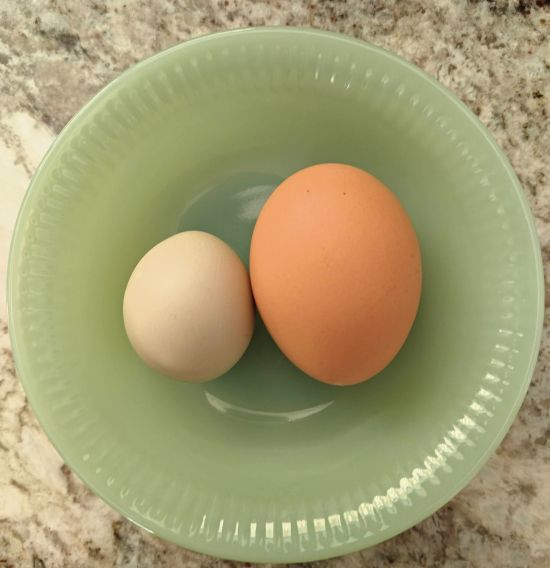
Tiny Eggs? Understanding the Early Laying Phase of a Pullet

It’s perfectly normal, and quite common, for a young pullet (under a year) to lay small or weird shaped eggs. At this age, she is just beginning her laying journey, and these small, (sometimes) yolkless first attempts are known as “fairy eggs.” This happens primarily because her reproductive tract is a complex assembly line that hasn’t been finely tuned yet.
While your pullet may look like an adult, her oviduct is still physically maturing. As she develops over the next several weeks, her body will become more efficient at processing bigger eggs.
Generally, tiny eggs are no cause for concern as long as your pullet is bright, alert, and eating normally. You should see a noticeable increase in egg size in due time. Keep in mind that most pullets don’t reach their maximum egg size until after their first adult molt. To support her as her production ramps up, make sure she has access to a high quality layer feed and a separate dish of oyster shell for calcium.

Back to HOME PAGE

How to Determine the Point of Lay

If you buy your birds as chicks, you can expect to feed and care for them for 22 to 24 weeks before they reach their point of lay. However, this depends on the breed, time of year, and the level of care they have received. It is not uncommon for some breeds to take even longer to mature and not produce until 25 to 30 weeks.
Some people would rather skip chick-rearing altogether and buy pullets already at their point of lay. Sounds like a good plan, but you’ll have to be patient with that choice. Even if they are laying eggs, they will most likely stop for as long as two months when they are moved to a new environment. It’s important to know the bird’s actual age too; point of lay doesn’t mean they are laying… it means they will lay in the near future.
Knowing the age of a pullet is important; you don’t want to feed a layer diet too early. Most people buy chickens to have a fresh supply of eggs. Rushing young birds may cause serious health issues, which won’t fill the egg basket!
So how can you tell if a pullet is actually close to laying? There is a simple way to check the age and the approximate point of lay.
Here’s How…
Pick up the pullet and tuck her head under your arm. Situate her so you can easily get to her rear end or vent area.
Locate the 2 pelvic bones.
If the pullet is not yet laying, the pelvic bones will be very close together.
If she just started laying the pelvic bones will be about 1 finger apart.
As a pullet matures and produces eggs, you will be able to put 2 to 3 fingers between the pelvic bones.
This test will give you an idea of a pullet’s age, it can’t tell you when you’ll get that first egg, but it will also help you determine the pullet’s feed requirements while you’re waiting.

Back to HOME PAGE