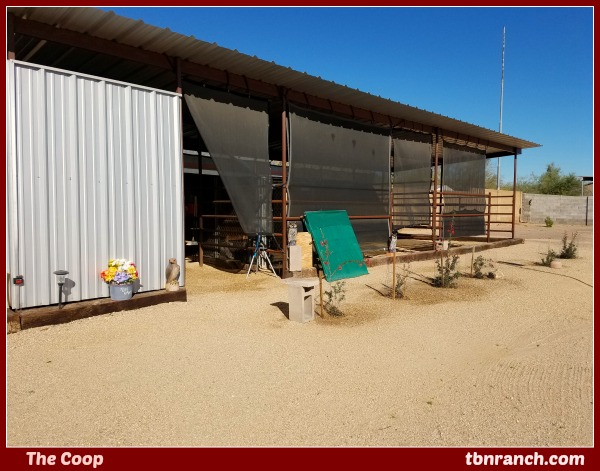
Spring is saying its last goodbye here in Phoenix. Temperatures are reaching the 80s during the day, which means only one thing: the real HEAT is coming. I took advantage of the mild weather yesterday and prepared the chicken coop for the dreadful 115-degree days which inevitably are just around the corner. Mist systems are in place and in working order, even the old fan has been replaced with an industrial-grade high-powered oscillating model specifically made for barns. Sunscreens are all new and double-layered on the east and west sides of the coop. I dragged out the big drinkers to help keep the water cool and replaced the covered nest boxes with open tops. After a thorough cleaning and fresh shavings, we are ready for summer, bring it on!
It’s a challenge keeping chickens in extreme heat, this article will give you lots of tips on what you can do to keep your flock safe. Cold weather is not a problem, but heat is a whole different story… and it can be deadly.
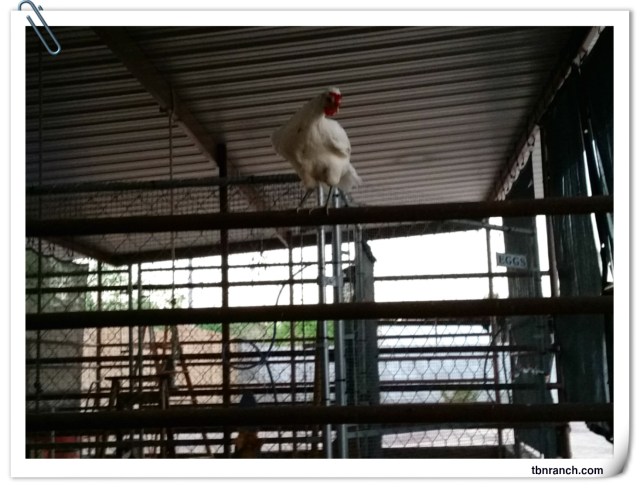
Chickens have a strong homing instinct which drives them to return to the same place to roost at dusk. Those who for whatever reason have decided otherwise can easily be picked up when it’s dark and placed in the coop. After a few days to a week at most, they usually give up the tree limb, fence, or corner they fancied and join the others in the coop without your interference. Make sure it’s dark though! Because as soon as you turn your back they’ll run back to where you took them from. It’s very common for youngsters to choose a corner on the ground away from the coop. Just pick them up and place them where you want them to be and they’ll catch on after a while. However, don’t be concerned if your young birds pile up together in the coop, just be glad they’re in there! As they mature they’ll find their way to the roost, usually at around five months old. This four-month-old Leghorn chose this spot to roost for the night. After a few evenings of fetching her off the fence and putting her in the coop, she gave up and now joins the others on her own.
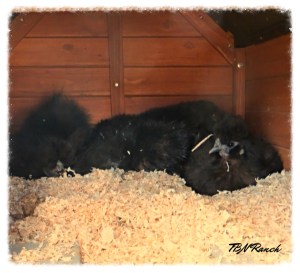
Do all Chickens Roost? No, don’t ask me why… some, such as Silkies for example, are known to hunker down for the night in the coop, off the roost. I have four one-year-old hens that refuse to roost, it doesn’t matter, as long as they are safely confined at night I just let them choose their comfort zone.
Night Behavior A chicken’s behavior is dramatically different at night. During the day they are full of life, feisty, and confident, but when the night comes they turn into total milk duds, almost as if they were in a hypnotic state. Take advantage of this time, this is your hassle-free ticket to handle, inspect, and doctor chickens. Especially the ones that are difficult or impossible to catch during the day. Chickens are so docile at night that you can usually sneak a new bird in the coop after dark, it will most likely go unnoticed until morning. Some chicken keepers choose to introduce birds this way. But I must warn you, a chicken’s night stupor disappears the moment they march out of the coop at the crack of dawn. Be prepared to witness a whole new ball game of unkind introductions, to say the least! Learn more about Introducing Chickens to an Existing Flock.
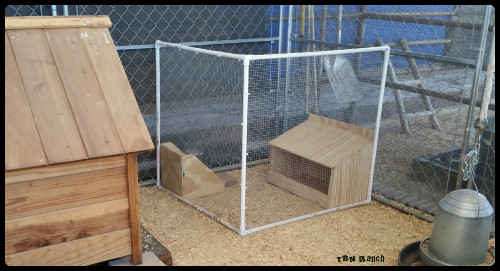
Mamma hen was separated from the flock five weeks ago to hatch and raise her baby chicks in a quiet and safe environment. The chicks are now two weeks old and it’s time to move Mamma and her babies back to the coop. To keep harmony among the flock, I’ve closed off a corner with hardware cloth to allow visibility between the existing flock, Mamma, and babies. The frame is merely PVC pipe cut in 3-foot sections with wire attached using zip ties.
Here’s the set-up I’m using from Nursery to Coop
Moving the hen with her chicks is best done at night when all the birds are sleeping. Last night wearing my handy headlamp, I headed out to the nursery coop. Throwing a blanket over the nest, I took Mom and her chicks, (nest box and all), and placed it in the designated transition pen inside the coop. Come morning it will be introduction time! Safe, peaceful, and everybody is happy. After a week or so, I’ll allow Mamma to take her babies out of the enclosure. She will protect her babies from the existing flock, and at about five weeks, she will begin putting distance between her and them. Note: Many chicken keepers allow their hens to hatch their eggs in a secluded area within the chicken coop. Others move hen and eggs back to coop three or four days before the hatch, both ways are certainly okay. I just like to give my hens a quiet place to do their mothering, it’s merely a personal preference.






 TBN Ranch Chicken Keeping Resources