5 Chickens That Lay Colored Eggs

Looking To Add Some Color To Your Egg Basket?

Ameraucana: This breed is known for its blue or green eggs. The color can range from light blue to a darker green.
Easter Egger: This is a mixed breed that is often confused with Ameraucanas, but can lay a wider variety of colors, including blue, green, brown, and even pink.
Marans: This breed is known for its dark brown eggs. Some Marans can lay eggs with a deep red color, which is highly prized by some egg enthusiasts.
Welsummer: This breed is known for its dark, terracotta-colored eggs. The eggs can have speckles or spots of a darker color.
Olive Egger: This is a mixed breed that is created by crossing a dark brown egg-laying breed (such as Marans) with a blue or green egg-laying breed (such as Ameraucanas or Easter Eggers). The resulting eggs can be a shade of olive green.

Back to Chicken Keeping Resources HOME PAGE

Silkie Hens Fill the Egg Basket Too

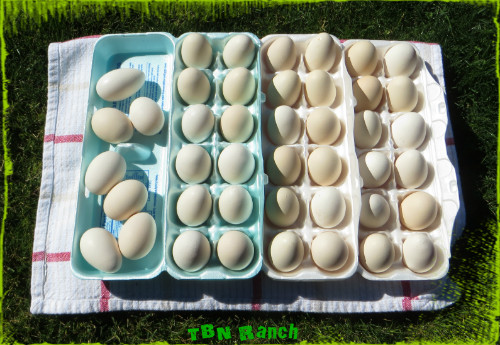
You may have heard the Silkie Bantam is only a fair egg layer, but is this a fair statement? Perhaps they get a bad rap because they’re often broody which interrupts egg production. True, but in my opinion, this incredible bird should be considered a master of two jobs. I give them five stars for their dedication to motherhood, and here’s their generous contribution to the breakfast menu. Not bad, not bad at all!
My Silkies lay every other day on average, with little change during our mild Arizona winters.  There are six birds in my flock over the age of four and are still producing at the same rate. As far as I’m concerned, a chicken’s production decreasing after the age of two years has not proven true on our little farm.

There are Always Exceptions

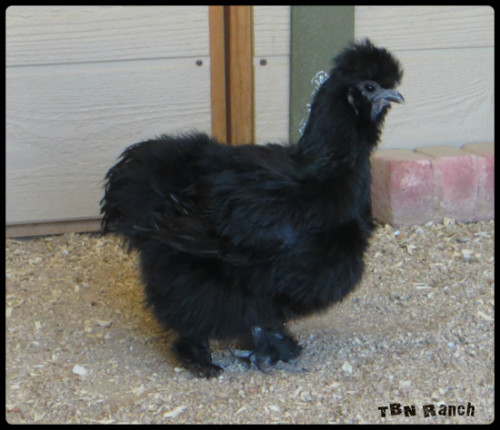
Silkie 3-114

Meet Fern, this little lady doesn’t lay eggs at all, ever!  Hatched in 2012, isn’t interested in setting on eggs, and has never gone broody. But no worry, there’s still a job for her here as a bug eater. She’s also valuable as a warm body to the others on those occasional cold winter nights.

Back to Chicken Keeping Resources HOME PAGE

Pre-Emergent Herbicides and Chickens

I was introduced to pre-emergent applications years ago when the weeds on our ranch became an overwhelming challenge to control. We tried everything including Round-up, it was incredibly costly to spray our entire property and it wasn’t even very effective. After a month the weeds were all back.
Pre-emergent applications sprayed twice a year are virtually 100%, and a fraction of the cost too. We use a professional service here in Phoenix that guarantees we won’t see a single weed or they come back free of charge.
However, now that I have some retired and free-range chickens on my property, I had concerns about their exposure to my bi-annual pre-emergent treatment scheduled for this week. 
Are Herbicides Harmful to Chickens?
Herbicides are intended to kill weeds. While many herbicides are usually not as toxic as pesticides, herbicides may be dangerous to chickens… and in my opinion, neither is a good idea, for chickens, or people.
Since 2018 we no longer treat weeds on our property.

Back to Chicken Keeping Resources HOME PAGE