What’s New in the Chicken Coop

The Ultimate Set-up Just Got Better
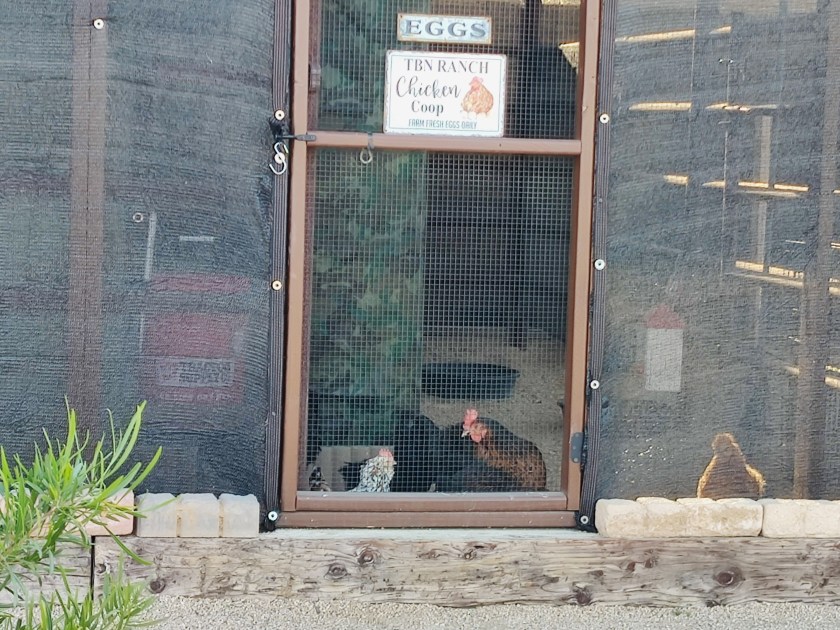
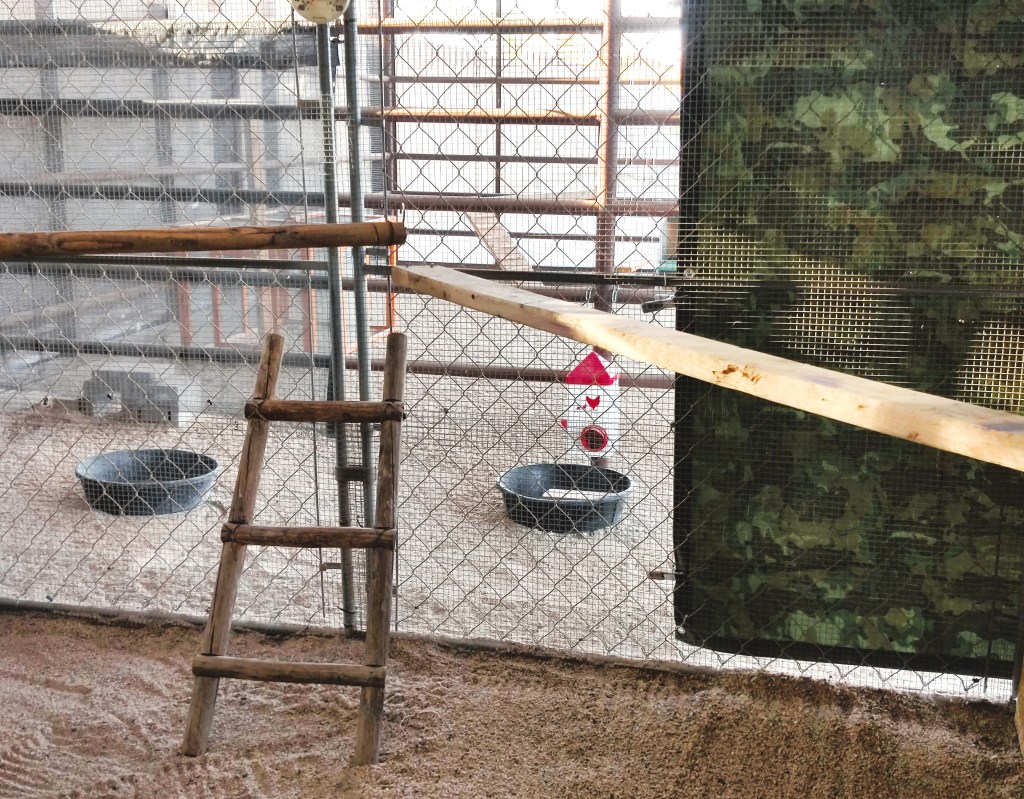
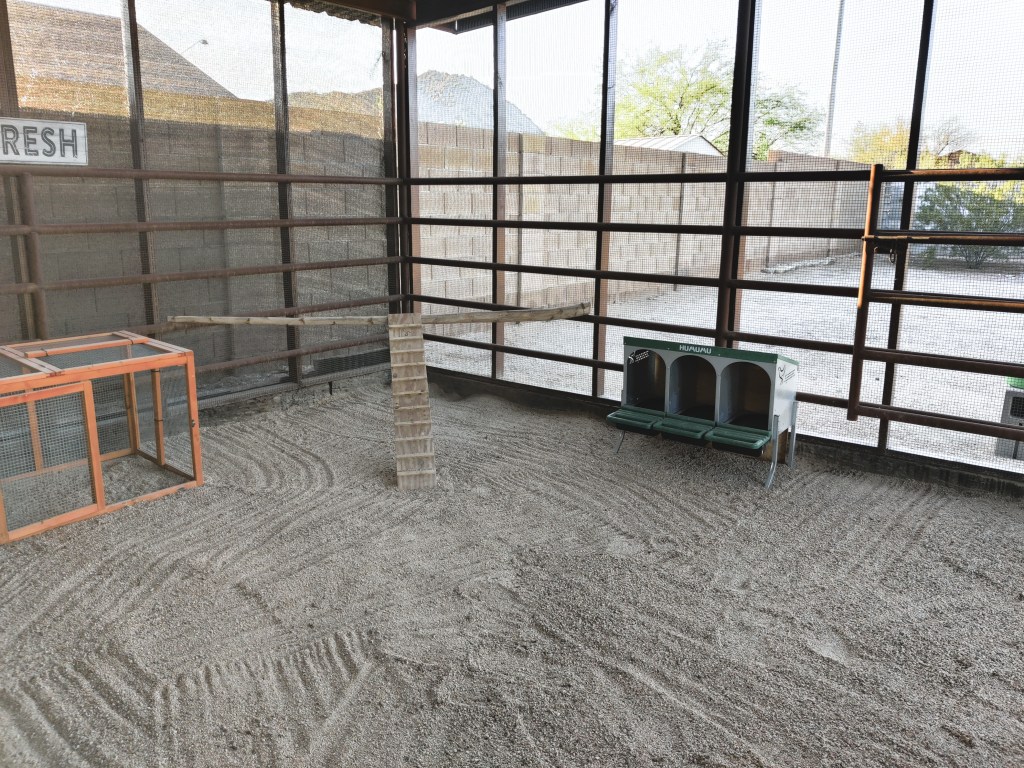
There have been many coop improvements made over the winter. The coop was once an open-sided covered corral for horses that I had professionally enclosed with heavy-grade hardware cloth – more about that build HERE.
The desert doesn’t offer many options for lush greenery, but I managed to find bushes native to the desert southwest and planted three of them in front of the barn for a little color and hopefully some shade when they mature. I have a giant drum fan to help move the air in the coop, and it’s suitable for normal summer heat, but Phoenix doesn’t have normal heat; we have to keep chickens alive in 115+ temps, which is nearly impossible without human intervention. Usually, that means a mist system of some sort, along with fans, ice, and whatever else might offer them some relief. In other words, everything needed to keep chickens alive in these ridiculous high temps is a giant inconvenience and one I was determined to somewhat avoid this summer. Here’s what I came up with…
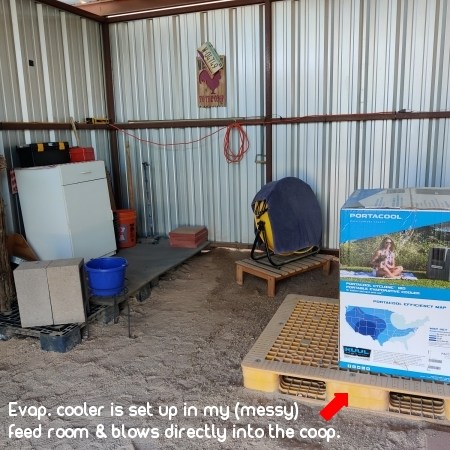
I bit the bullet and bought an evaporative cooler large enough to cool the coop area. I also bought 10 lb. feeders and scattered them in different areas of the coop to help minimize feeding chores. Daily farm chores now are basically watering and clean-up. Even my clean-up chores are easier now since I ditched the pine shavings and switched to sand. If you want to know more about sand vs. shavings, all the information is in a previous article HERE.
Purchasing an evaporative cooler is a double win-win scenario: it benefits the chickens by providing a more comfortable environment, and let’s be honest, it’s a relief for me as well. Working in scorching temperatures I definitely won’t miss.

About The Evap. Cooler…
Portacool 2000-CFM 2-Speed Outdoor Evaporative Cooler
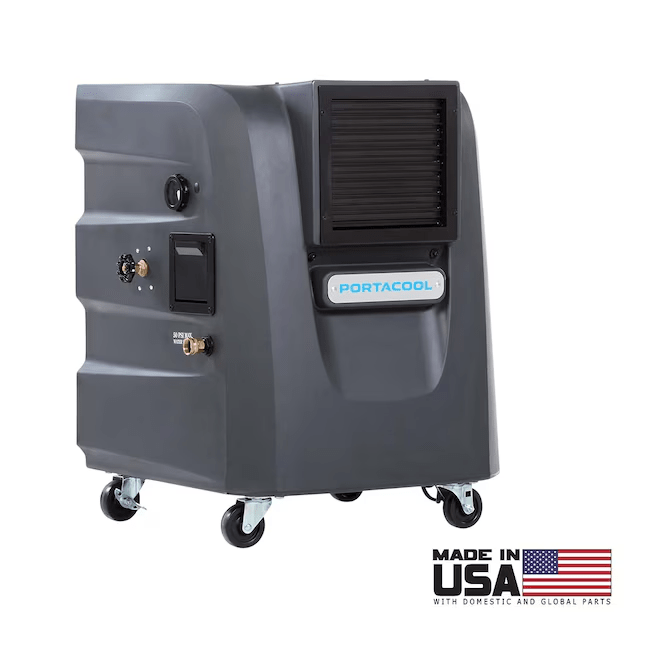
What’s an evaporative cooler? It produces cool air wherever needed, such as a backyard patio, garage, barn, or workshop. Evaporative coolers are most effective in dry climates where humidity levels are low. They can be an energy-efficient and cost-effective cooling solution compared to traditional air conditioning systems, as they consume less electricity. You can learn more about this evap. cooler or check out the large selection of different models available at Lowe’s.

TBN Ranch Chicken Coop

The Coop, Inside & Out…

A Few of the Hens…

A Guide for Keeping Chickens in Hot Climates

There are many ways to help your chickens survive the heat of summer. Luckily, in most parts of the country, this isn’t a big concern. However, if you are a desert dweller and have chickens, you’ll find a wealth of information in this article on how to manage them in hot weather.
Back to HOME PAGE

Most Common Urban Chicken Predators in Phoenix AZ

How to Keep Your Flock Safe from These Common Natural Predators

Coyote

Coyotes are common in urban areas of Phoenix and are known to prey on chickens. These animals are highly adaptable predators that can thrive in a variety of habitats, including rural, and highly populated urban areas. They are opportunistic hunters & it’s almost certain the coyote will eventually find your chickens.
Note: The coyote rarely takes one bird, they are known to kill the entire flock, take one or two birds and leave the dead behind.

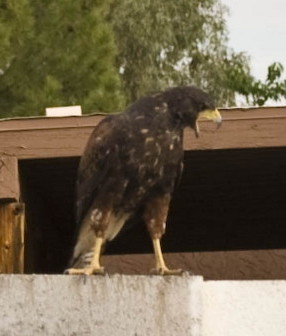
Harris Hawk

The Harris Hawk is a bird of prey that can swoop down and carry off small animals, including chickens. They are known to be skilled predators, and they hunt a variety of prey. They hunt in groups, which is uncommon among raptors.
They often hunt cooperatively, with one bird flushing prey from cover while another waits in ambush. This allows them to take down larger prey than they could handle alone.
The Harris hawk is a skilled and adaptable hunter that has evolved unique hunting behaviors to maximize its chances of success in capturing prey.

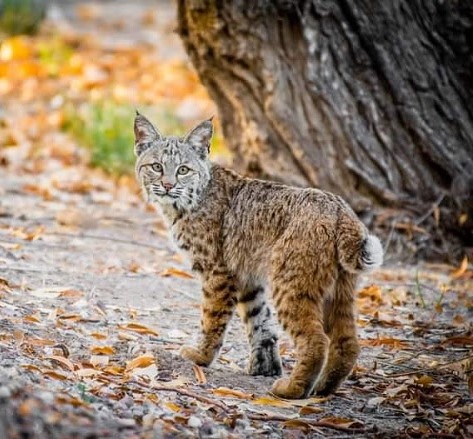
Bobcat

Bobcats are carnivorous animals and are known to prey on a variety of animals, including chickens. When hunting chickens, bobcats use their keen senses of sight, hearing, and smell to detect their prey. So it’s especially important to keep your keep clean. Bobcats typically wait until dusk to hunt, but keep in mind, I have experienced an attack during the day, so always assume your birds are at risk if unprotected. Bobcats aren’t known to be greedy, they usually take just one bird.

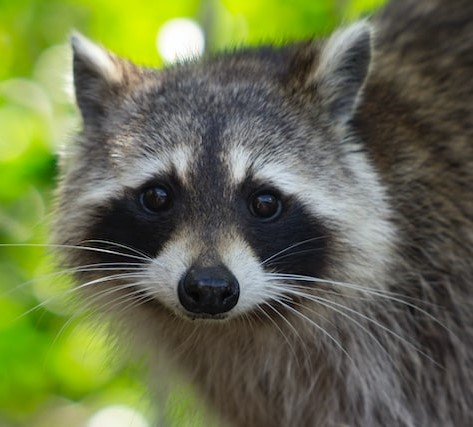
Racoon

Raccoons are known to be skilled at breaking into chicken coops and killing chickens. They are not a huge threat in the city, but I have seen them on our urban farm.
Raccoons are a type of mammal that are known for their distinctive “hands.” Raccoon hands which are very dexterous and have long, flexible fingers that can grasp and manipulate objects with ease, such as latches on coop doors.

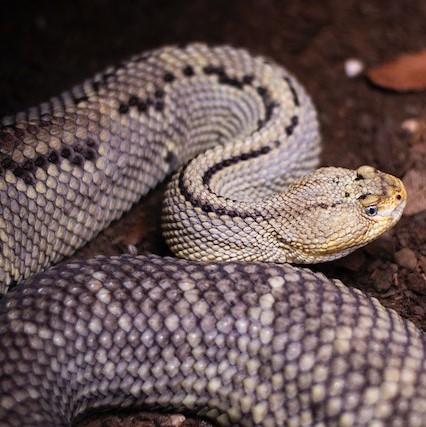
Rattlesnake

Rattlesnakes can pose a threat to chickens, they are venomous snakes that are found not only in desert areas but the city as well. They are known to prey on small animals which includes birds. Chickens are potential prey for rattlesnakes because they are small and often forage on the ground, which makes them vulnerable to snake attacks. If a rattlesnake can get into a chicken coop or other chicken enclosure, it may be able to kill or injure chickens.

How to Protect Your Backyard Flock From Predators

Secure your coop: Make sure that your coop is secure and predator-proof. This includes using sturdy materials for the coop, such as wire mesh or hardware cloth, and ensuring that all openings are covered with tight-fitting, predator-resistant material. It is also important to have a strong lock on the door, as many predators are quite clever at finding their way in.
Provide a secure run: A run is a fenced-in area where your chickens can roam during the day. Make sure the run is secure with a sturdy fence that is buried at least 6 inches into the ground to prevent predators from digging underneath it. Cover the top of the run with netting or wire mesh to prevent hawks or other birds of prey from swooping in.
Keep the area clean: Predators are attracted to areas where they can easily find food, so make sure to clean up any spilled food or water and store feed in a secure container. Also, remove any debris or brush around the coop that predators could use as cover. Droppings from your birds are also an attractant, clean the coop at least once a week.
Use lights and sound: Some predators are deterred by lights or loud noises. You can install motion-activated lights around the coop or a device that emits sound to deter predators.

Back to HOME PAGE

Phoenix AZ City Ordinance for Keeping Chickens

2023 | Phoenix, AZ |Section 8-7. Poultry & Rodents

No poultry or rodents shall be kept in an enclosure within eighty feet of any residence within the City. Poultry may be kept within eighty feet of a residence if written permission consenting to the keeping of poultry less than eighty feet from a residence is first obtained from each lawful occupant and each lawful owner of such residence. Poultry shall not be kept in the front yard area of any lot or parcel within the City. Poultry and rodents shall be kept in an enclosure so constructed as to prevent such poultry and rodents from wandering upon property belonging to others.
No more than twenty head of poultry nor more than twenty-five head of rodents nor more than twenty-five head comprising a combination of rodents and poultry shall be kept upon the first one-half acre or less. An additional one-half acre shall be required for each additional twenty head of poultry or for each additional twenty-five head of rodents or for each additional twenty-five head comprising a combination of poultry and rodents. For areas larger than two and one-half acres the number of poultry or rodents shall not be limited.
No male poultry shall be kept within the City limits except such male poultry as are incapable of making vocal noises which disturb the peace, comfort or health of any person residing within the City.
All such enclosures shall be kept in such condition that no offensive, disagreeable or noxious smell or odor shall arise therefrom to the injury, annoyance or inconvenience of any inhabitant of the neighborhood thereof. 

Section 8-5. Manner of Keeping Generally

It is unlawful for any person to keep or maintain any animal or bird in the City in a manner likely to disturb the peace, comfort, or health of any person residing within the City.
A person who violates this section is guilty of a Class 1 misdemeanor, however, the City Prosecutor may authorize the filing of certain cases or classes of cases as civil violations unless the person previously has been found responsible or guilty of violating this section.
A person found responsible for a civil violation of this section is subject to a sanction of not less than one hundred fifty dollars and not more than two thousand five hundred dollars.
In addition to any other penalty authorized by law, a person found guilty of a criminal violation of this section shall pay a fine of not less than one hundred fifty dollars.
Can you Have Chickens Where You Live?
Check with your local government or health department websites for information on regulations and restrictions regarding raising chickens in your city.
Key words: Poultry & Rodent Ordinance

Back to Chicken Keeping Resources HOME PAGE