Breaking the Broody Hen

What Broody Means, and What to do When it’s a Problem

Definition of Broody: A hen with strong instincts to hatch eggs, whether or not they are fertile, or even present in the nest.
Signs: Your hen won’t leave the nest, appears to not be eating, her feathers are all fluffed up, and she looks a bit spread out. These are classic signs of the broody hen. First of all she isn’t starving, she is eating and drinking, but it’s low on her list of priorities. She may only eat just enough to survive.  The fact that she isn’t sitting on eggs won’t make a difference to her, so don’t assume she’ll just give up in a day or two, she won’t.  This behavior could last weeks, and during that time period she will not lay eggs.
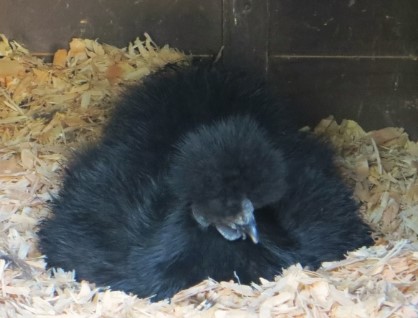
Broody Hen

Her behavior can be disrupting as well, she may not allow the other members of the flock near her nest, not only is that opening the door for drama, but the laying cycle of the entire flock can be disturbed. Make sure you have enough nest boxes for your flock.
What to Do
You can sometimes discourage the broody hen by moving her nest box, covering it, or to the less dedicated lady, simply take her from the nest a few times the first day. However, there are some with very strong instincts and you may actually have to change her environment completely by moving her to another place. This might take her mind off sitting on eggs and back to laying them.
Another trick that I use here at the ranch is getting air underneath the hen. The best way to do this might require a few changes to your nest area, but it’s well worth the effort. I don’t like keeping my birds on a wire grate in the nesting place, but I do have have a place with that option for the simple solution of breaking the behavior of the broody hen.

I have a piece of plywood covering the wire grate in their nest area, over that is a gracious amount of grass hay. When the occasional broody hen occupies the nest, I simply remove the plywood, by exposing the wire grate, the hen has air flow under her – which to her, is completely unacceptable.
Note: It’s important to act quickly when addressing the broody hen, the longer you allow it to continue, the longer you will have to wait before she starts laying eggs again.
Back to HOME PAGE


Chicken Nest Boxes and Bedding

There are many different types of nest box bedding that chicken keepers use. There’s no right or wrong one, you just have to find the one that suits your bird’s needs or preference for the type of nest boxes you have.
Nesting material is important, if your hens scratch around in their nesting box and kick all the bedding out you’re going to have broken eggs.  The kind of nesting boxes you have is also important. If they are semi-enclosed for privacy, such as a wooden box with a hole for entry there is less chance your birds will kick out their nest material. Shredded burlap partially covering the entry hole is also helpful.
Bedding Materials / Pros and Cons
Wood shavings: A great choice if you have a box that will prevent the chickens from kicking it all out of the nest.
Straw: Many people use straw, it’s inexpensive and goes a long way. However, it does get hard and brittle which can cause irritation to the hen’s vent area.  It also tends to mold.
Grass hay: I like it because it’s soft and stays soft for at least a month and my birds don’t kick it out of the nest. But a little spendy.
Sand: Clean, and makes for an easy clean-up using a kitty litter box scoop.
Solutions for Broken Eggs in the Nest Box
Lining the bottom of nest boxes with a cushioning material under the nest bedding can be very helpful if you are finding broken eggs.
Here are a few ideas that are often used as nesting box liners.
Corrugated cardboard
Rubber shelf liner
Carpet, upside down
Artificial turf, upside down
Rubbermaid kitchen sink mats

Back to Chicken Keeping Resources HOME PAGE

Feed Store Chicken Lottery

The Pullet is a Rooster? Options and Solutions

They’re pullets, all female, and that’s why you bought those cute little chicks from the feed store. You certainly didn’t expect to get stuck with a rooster, but now you’re the unlucky one who has fallen into that teeny tiny margin of error and has an unwanted cockerel.
Considering your Options
Check your city ordinances, roosters are often banned in suburban areas, so considering the impossibility of hiding him, an eviction notice is definitely in order. I know this is a hard decision, but it only takes one neighbor to complain and the law will be snooping and sniffing around your property.
If you are allowed to have a rooster you still may have a problem if you already have one. Rule of thumb… more than one rooster to a flock is a no-no.  Another thing to consider is your hen’s eggs are going to be fertile, not exactly an ideal situation if you’re selling eggs.
Not all chicken keepers raise meat birds, so we folks who keep only layers have completely ruled out killing and cooking one of our birds for dinner. That’s an art in itself, and if you’re like me, one better left to somebody else.
Check with the feed store you bought the bird from, sometimes they’ll take it back.  But realistically, most unwanted cockerels share the same fate, a dinner plate.
If the feed store idea is a bust, it’s time to re-home the roo. Ask friends who might live in a more rural area. Craig’s List has come through for me time and time again. Last year I had six roosters to re-home, and they all sold for $5 bucks each.  Just keep in mind, cock fighting does exist, so weed out the riff-raff and dust off your good judge of character skills.
Beat the Odds of the Chicken Lottery
There is a solution to that 1% margin of error when buying sexed chicks.  If you want to be assured you’ll never get stuck with a rooster again, buy sex-linked chicks.  They’re idiot-proof in the sexing department because the hens hatch one color and the roosters another.  They’re hardy, and I wouldn’t be surprised if they wrote the book on egg laying.
Sex Link Chickens
Two common varieties are the black sex-link (also called Black Stars) and the red sex-link (also called Red Stars).

Back to Chicken Keeping Resources HOME PAGE