Chickens and Heat Distress, What to Do

When Should you Supplement your Flock with Electrolytes?

In the heat of summer, there are warning signs when chickens are suffering from heat distress. Once you recognize these signs, consider them as a reason to add electrolytes. Electrolytes are available in feed stores that carry retail poultry products, even Amazon will have it. You’ll find easy-to-follow instructions on the back label informing you how much to put in their drinking water. 
Warning Signs Heat Distress
Panting, holding their wings away from their body.
Combs and wattles a deep red, or pale.
Restlessness.

Signs of Heat Stress | What to Do
Much more dangerous is Heat Stress. Below are the signs your chickens are in great danger and could even die if you don’t act quickly.
Not eating or drinking.
Pacing.
Disoriented.
Wobbling.
Lethargic.
Dark reddish-purple wattles and combs.
Submerse chicken in warm water (a 5 gal. bucket from Home Depot works nicely) and move the bird to a shady spot. Don’t bring the bird indoors, it will only cause more stress when returned outside. A fan nearby would be ideal. Don’t try to force water, when the bird cools down it will drink on its own. Chicken feed is not important at this point,  don’t push it, offer watermelon instead.

More Information…

Back to Chicken Keeping Resources HOME PAGE

Little Giant Poultry Drinker, Solving the Overflow Problem

plastic-poultry-header

Many people are complaining this drinker overflows and leaves their birds without water, but there’s a simple fix to this problem. This drinker is a good product, but there’s a trick to keeping it from leaking everywhere. I sent my first one back, the second ended up in the shed on a shelf. But now I use it every day and love it.
First of all, I’m sure you already know it’s important to place the drinker on level ground, and up on a cinder block is good practice too. But here’s the real trick to stop it from overflowing. After you fill the drinker full, loosely tighten the cover on top. Remove the black cap on the side allowing the fountain to fill. While it’s filling, loosen the black cover on top (kind of a lot) then tighten it again. This will create the vacuum needed to stop it from overflowing. That’s it!


Back to Chicken Keeping Resources HOME PAGE

Introducing Hatch-a-Long Chicks to the Flock

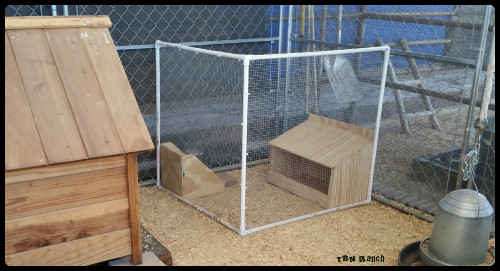
Mamma hen was separated from the flock five weeks ago to hatch and raise her baby chicks in a quiet and safe environment.  The chicks are now two weeks old and it’s time to move Mamma and her babies back to the coop. To keep harmony among the flock, I’ve closed off a corner with hardware cloth to allow visibility between the existing flock, Mamma, and babies. The frame is merely PVC pipe cut in 3-foot sections with wire attached using zip ties.

Here’s the set-up I’m using from Nursery to Coop

Moving the hen with her chicks is best done at night when all the birds are sleeping. Last night wearing my handy headlamp, I headed out to the nursery coop. Throwing a blanket over the nest, I took Mom and her chicks, (nest box and all), and placed it in the designated transition pen inside the coop. Come morning it will be introduction time! Safe, peaceful, and everybody is happy.
After a week or so, I’ll allow Mamma to take her babies out of the enclosure.  She will protect her babies from the existing flock, and at about five weeks, she will begin putting distance between her and them.
Note:
Many chicken keepers allow their hens to hatch their eggs in a secluded area within the chicken coop. Others move hen and eggs back to coop three or four days before the hatch, both ways are certainly okay. I just like to give my hens a quiet place to do their mothering, it’s merely a personal preference.

Silkie and Chicks 51016
Mamma & her babies
Back to Chicken Keeping Resources HOME PAGE