Designing a chicken coop ramp should be easy, right? It sure seems that way, but the second you sit down to do it, you realize you have loads of questions. How steep should it be? How wide should it be? Does it need cleats or rungs? If so, what size should those be? How far apart should those be? Read Article
If you’ve ever had to catch a chicken you know it’s not an easy task. Here’s the Simple Way
You probably already know a chicken can run faster than a human, so chasing a bird around like a maniac is going to get you nowhere. To make it even more difficult, chickens are smart, so any device you’ve used before such as a pole or net, is something they’ll remember immediately, and run. There’s a simple answer to catching a chicken, the only drawback is you’re going to have to work at night. Wait until your chickens have gone to roost for the evening. Enter the coop wearing a headlamp (keep the beam of light pointed at the ground) hover over the bird and place both hands over the wings so the bird can’t flap around. Then gently remove the chicken from the perch. You can wrap a towel around the bird if you’ll be treating it medically, or if you just want a bit more security, especially if you’re handling a rooster. Chickens are happiest when they’re in a comfortable and predictable environment. If one of your birds has escaped from the coop, it will enjoy the freedom for a while, but come sundown it will return to the safety of the coop to roost for the night. The rest of the flock will rarely leave the coop at dusk, so it’s a good bet you’re safe to open the coop door for your escapees’ return. Remain calm and unhurried, a chicken will easily pick up on your anxiety. You don’t want the bird to be reluctant or fearful to return to the coop. A sparse trail of scratch leading into the coop might add a bit of helpful incentive. Keep your distance from the coop door, wait for the bird to join the flock, then approach the coop to close the door.
The chicks are heading into their 5th week in the brooder and will be ready to move into the coop the following week. This is what I call their transitional week. Their radiant heat source is slowly taken away, and they’ll also lose their all-night red lighting. The first few nights I switch from red lighting to a white night light, then the night light is taken away. By the time they transition from brooder to coop, they will have learned to accept cooler temperatures and total darkness at night. In most parts of the country, chicks are kept in the brooder until they are fully feathered, which is usually around 8 weeks. Here in Phoenix, Arizona, by the end of April temperatures during the day reach about 85-90, lows about 65. Therefore, it’s plenty warm to move the chicks to the coop at about 6 weeks. As you can see, they’re pretty well-feathered already!
The Finished Coop
The coop is an existing 10×10 x walk-in covered dog enclosure converted to a chicken coop. It’s inside a 3 stall covered open air barn, offering them plenty of shade and fresh air. It has taken almost 3 weeks to completely cover the chair link fencing with 1/2 inch hardware cloth. Needless to say, I have spent my self-quarantine time wisely. Unfortunately, my fingers are a mess from working with stubborn wire and zip ties.
Predators have been a problem in the past, we have had our share of traumatic experiences with hawks, bobcats, and coyotes. I’ve lost at 8 birds over the years, with so much time on my hands, this was a good time to put the effort into predator-proofing the coop. Not to mention keeping wild birds from entering the coop and eating all the chicken feed.
Tip: Chicken wire isn’t going to keep your birds safe from predators, always use hardware cloth. Chicken wire can be chewed through or easily bent to give predators access. Also, lay /bury hardware cloth at the base of the coop to prevent digging by raccoons and coyotes, etc. More About Predators

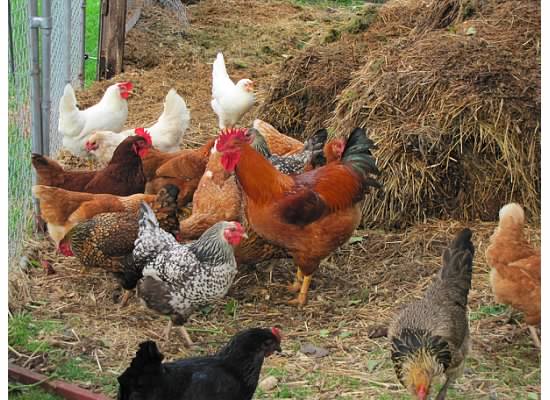
 You probably already know a chicken can run faster than a human, so chasing a bird around like a maniac is going to get you nowhere. To make it even more difficult, chickens are smart, so any device you’ve used before such as a pole or net, is something they’ll remember immediately, and run.


 TBN Ranch Chicken Keeping Resources