Best Classroom Incubator and Brooder Kit

If you’re looking for the best COMPLETE kit for hatching baby chicks in the classroom, this is it. The key to an enjoyable experience is being prepared with the proper set-up. This incubator and brooder kit is from a reputable company that will stand by its product.
You can also expect a friendly and knowledgeable staff that will be happy to help you with any questions you might have along the way.
Order the kit first, then ask a Murray McMurray representative about how and when to order hatching eggs. It’s that easy!
Note: Make sure you’ve arranged a place for your chicks to go once they’ve hatched. Craig’s list in ‘Farm & Garden’ is the best place to re-home baby chicks. They’ll probably go fast if you price them at $3.00 ea. Remember what breed they are, that will be important to many chicken keepers.
Order at Murray McMurray $299

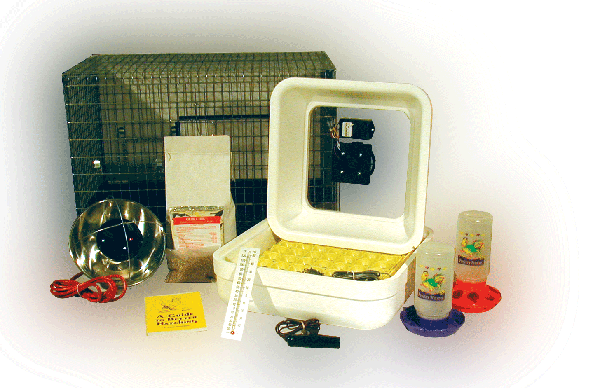
Everything you will need to incubate, hatch, and brood, plus a book and a poster are included in this kit.
You Will Receive:
Full View Picture Window Incubator
Includes:
Electronic thermostat, fan, and automatic egg turner.
The book Guide to Better Hatching.
Candling Device used to check the progress of development.
Brooder – After the birds are dry from hatching use the accompanying brooder to continue the healthy growth of chicks. This brooder is made of heavy galvanized wire mesh, wire floor, and approx. 1 1/2” to 2″ deep set-in plastic tray. There are clips on the side of the cage for easy removal and cleaning of the bottom pan. The brooder is to be used in a room that is approximately 70 degrees with no direct drafts.
The brooder holds 30 chicks for up to 10 days. It is easily assembled.
The Brooder Kit Includes:
Brooder Cage measuring 30” W x 18” L x 18” H.
Plastic poultry Waterer.
Snap-on Feeder.
5 lbs. of Chick Feed, 1 lb. Grit. and 4oz Quik Chik
Single Bulb Brooder Lamp with Infra-Red Heat Bulb
Brooder Thermometer

Back to HOME PAGE

Raising Winter Chicks in Phoenix

When Can Chicks Be Moved Outside in Phoenix?

It’s a good guess you have your new chicks in a box in the garage or shed and are watching them quickly outgrow their safe haven of comfort and warmth.
At about 6 weeks old they are becoming a handful, looking a bit crowded in their quarters, and you’ve had enough of keeping up with the mess. I understand your dilemma and have good news for you. We live in Phoenix! With mild winter temperatures, even at 6 weeks, your chicks will be fine outside with the right housing accommodations. However, first, you’ll want to lower the temperature in their brooder over the next few days to get them used to cooler temperatures.

A suitable coop for 6-week-old chicks is something that will protect them from wind and rain. If your coop is drafty, a large tarp will do wonders. Buy the highest-grade tarp you can find, or use two.
If there’s a cold snap, say below 50 degrees, simply cover the coop with a heavy blanket. Moving blankets from Harbor Freight work great and they’re only $8. The chicks will huddle together at night and keep each other warm.
Give them lots of shavings or hay in the coop, and provide a low-sided brooder box filled with shavings in the corner for them to sleep in. If they don’t use it, that’s okay too.

Prepare for the Phoenix Heat Now

While watching your chicks grow in the confinements of their coop, this is a good time to think about summer’s arrival and prepare for their outdoor environment. Keeping chickens in Phoenix is tough, keeping them in small confinement quite honestly… can be a death sentence.
June and July will no doubt reach 110 to 115 degrees. This means, your coop could easily exceed 120 degrees, even if it’s in the shade. It’s imperative to provide a play area where they can dig holes in the dirt to stay cool.
A play area can simply be a fenced area off the coop. Look for or create a shady spot preferably near a water source so it’s easy for you to access. This is important because there will be days when you’ll want to use a mister, or maybe flood them a spot to help them cool off.

I wasn’t kidding!
Back to HOME PAGE

Picked On, Pecked On Chicks. Why and What To Do?

Let’s start at the beginning with chicks in the brooder. Chicks don’t just peck each other for lack of something to do. There is an underlying problem causing them stress and/or aggravation. As with any living creature, the first and foremost necessity for well-being is comfort.
Providing chick starter crumbles and fresh water is a given, so we can certainly rule out hunger as the stress factor. It is my opinion there are two other very important factors to consider. Living environment and lighting, with significant emphasis on the latter. Overcrowding may or may not be the culprit in their acquired pecking behavior. However, if ample space is not provided away from a bright light heat source, their comfort may be compromised.
Always provide more than one feeder so weaker birds are not bullied. Also, by week 3, keep them busy with offerings of green grass, especially when you witness aggression.
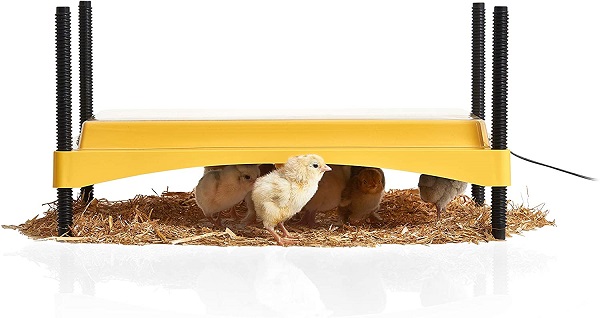
You may want to make the switch from a heat lamp and switch to radiant heat from a heat plate brooder. This will solve your fluctuating temperature problem, and providing you have a good number of chicks, it will be sufficient in keeping them warm.

Radiant Heat Plate by Brinsea

Note: If you feel they are too cold you can supplement with a low-wattage red heat lamp. Low-wattage heat bulbs are sold for reptiles, I usually use a 50, or 100, depending on how cold it is.
I’m convinced that happy and content chickens start in the brooder. It’s easy to tell if the brooder has comfort zones. You should see some birds huddled together under the heat source, some resting alone, some scratching in the litter, and some eating. Watch your chicks, their behavior says it all.

Back to HOME PAGE