Naked Neck Turken

Turken

The Turken is a light brown egg layer and is considered a dual-purpose utility chicken. It is especially suitable for meat production as the breed has approximately half the feathers of other chickens, making them easier to pluck.
These birds are cold hardy and heat tolerant, excellent foragers, and immune to most diseases.
Their appearance is rather odd and not particularly appealing to some. Perhaps this explains why they’re not usually known to be an exhibition bird.
About
Size: 6.5 to 8 pounds
Type: Large Fowl & Bantam
Varieties: Black, Buff, Red, White
Egg Laying: 2-3 per week
Egg Size: Medium
Egg Color: Light Brown
Comb Type: Single
Personality: Docile & Friendly
Broody/Setters: Yes

Back to HOME PAGE


Campine

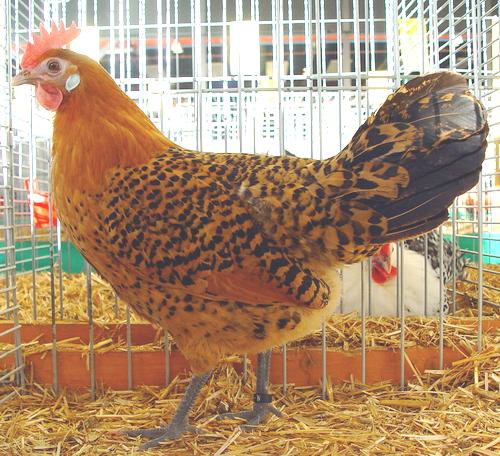
The Campine chicken, pronounced Kam-peen, is a beautiful and rare breed that originated in the Kempen Country near Antwerp, Belgium. They are close relatives of the Belgian Braekel. The Campine chicken comes in two varieties, the Silver and the Golden. Hens and roosters are nearly identical in feather coloration.
In 1893, Campine chickens were first imported into America by Mr. Arthur D. Murphy of Maine and the American Poultry Association recognized the breed in 1914.
Characteristics
Type: Large Fowl
Size: Male: 6lb. / Female 4lb.
Purpose: Egg Laying
Recognized Varieties: Silver & Golden
Crested: No
Feathered Legs: No
Number of Toes: 4
Single comb
Moderately cold tolerant
Not especially docile
Non-setter
Not broody
Tolerates confinement
Alert, intelligent, active
Egg Production
Expect about 3 medium to large white-shelled eggs per week.
Sexing
When Silver Campine females are mated to Golden Campine males the chicks can be sexed at day-old – the female chicks have a reddish blush and the males have gray on the top of their heads.
ALBC Status: Critical
For more information about the Campine visit the ALBC (American Livestock Breeds Conservatory.)

Back to Chicken Keeping Resources HOME PAGE

FAQ’S About Chickens

Back to HOME PAGE