Protecting Backyard Flocks from Avian Influenza

USDA recommends that owners of backyard flocks follow these six tips to prevent poultry disease. Feb. 2025

  • Keep your distance (restrict access to your property and your birds.)
  • Keep it clean (clean and disinfect your clothes, shoes, equipment, and hands.)
  • Don’t haul disease home (if you have been near other birds or bird owners, clean and disinfect poultry cages and equipment before going home.)
  • Don’t risk disease from your neighbor (do not borrow lawn and garden equipment, tools, or poultry supplies from other bird owners.)
  • Know the warning signs (sudden increase in bird deaths, sneezing, coughing, nasal discharge, watery or green diarrhea, lack of energy, poor appetite, drop in egg production, swelling around the eyes, neck, and head, and purple discoloration of wattles, combs, and legs.)

Report sick birds (call your local or State veterinarian, or USDA toll-free at 1-866-536-7593).

What can poultry producers do to prevent an outbreak on their farms?

  • Keep an “all–in, all–out” philosophy of flock management. Avoid skimming flocks—birds left behind are exposed to work crews and equipment that could carry poultry disease viruses.
  • Process each lot of birds separately, and clean and disinfect poultry houses between flocks.
  • Protect poultry flocks from coming into contact with wild or migratory birds. Keep poultry away from any source of water that could have been contaminated by wild birds.
  • Permit only essential workers and vehicles to enter the farm.
  • Provide clean clothing and disinfection facilities for employees.
  • Thoroughly clean and disinfect equipment and vehicles (including tires and undercarriage) entering and leaving the farm.
  • Do not loan to, or borrow equipment or vehicles from, other farms.
  • Change footwear and clothing before working with your own flock after visiting another farm or live–bird market or avoid visiting another bird farm if possible.
  • Do not bring birds from slaughter channels, especially those from live–bird markets, back to the farm.
  • If avian influenza is detected, farms must be thoroughly cleaned and disinfected. Avian influenza viruses are inactivated by heat and drying and also these viruses are very sensitive to most disinfectants and detergents. The area to be disinfected must be clear of organic material, which greatly increases the resistance of avian influenza virus’ resistance to disinfection.

What should producers do if their birds appear to have signs of avian influenza?

If birds exhibit clinical signs of highly pathogenic avian influenza or might have been exposed to birds with the disease, producers or bird owners should immediately notify Federal or State animal health officials.

All bird owners, whether commercial producers or backyard enthusiasts, should continue to practice good biosecurity, prevent contact between their birds and wild birds, and report sick birds or unusual bird deaths to State/Federal officials, either through their state veterinarian or through USDA’s toll-free number at 1-866-536-7593.
Additional information on biosecurity for backyard flocks can be found at http://healthybirds.aphis.usda.gov.

Back to Home Page

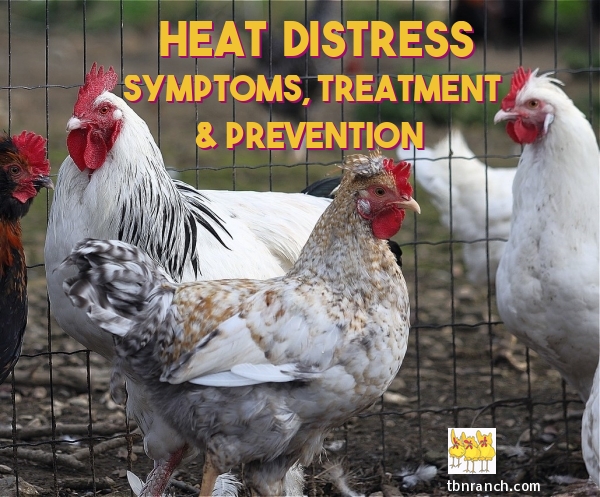
Chickens, Heat Distress Symptoms, Treatment, Prevention

Heat distress can lead to heat stroke, this is more common in poorly ventilated or coops that are either too small or over crowded. Here are some guidelines for both treatment and prevention of heat distress in chickens. Don’t bring your chickens indoors where it’s cooler, this will make it difficult for your birds to acclimate when returned to the coop. Move them to a shaded area and follow these steps listed below.

What Are The Signs of Heat Distress?


Panting: Chickens will often pant to try to cool themselves down when they are overheated. This is a common and visible sign of heat stress.
Wings drooping: When chickens are too hot, they may spread their wings away from their bodies in an attempt to release heat.
Lethargy: Heat-stressed chickens may appear lethargic and less active than usual. They may sit or lie down more frequently.
Pale comb and wattles: The comb and wattles of a chicken may appear pale or discolored during heat stress.
Diarrhea: Heat-stressed chickens may have loose or watery droppings.

Treating Heat Distress

Provide access to cool water: Offer the affected chicken cool, (not cold) water to drink. You can add electrolytes to the water to help with rehydration. This is available at any feed store.
Spray or soak the chicken with water: Lightly spraying or gently soaking the chicken with cool/warm water can help lower its body temperature. Do not submerge the bird in cold water, this can lead to shock.
Use fans or air circulation: If possible, set up fans or improve ventilation in the coop to reduce the temperature.
Use Shade Cloth: Never use tarps where birds are housed, they inhibit ventilation.

How to Avoid Heat Distress

Avoid overcrowding: Overcrowding can lead to increased body heat generation. Provide enough space for chickens to move around comfortably.
Limit outdoor activities during peak heat: If possible, restrict the chickens’ outdoor activities during the hottest parts of the day and allow them to roam when the temperatures are cooler.
Mist or sprinkle water in the area: Setting up a misting system or lightly sprinkling water in the chicken’s environment can help cool the air and reduce heat stress.
Monitor weather conditions: Stay aware of weather forecasts and plan ahead for extreme heat by implementing extra measures to protect the chickens.
Time feeding schedules: Consider feeding chickens during the cooler parts of the day to avoid additional heat generated during digestion.

Prevention is key to avoiding heat stroke in chickens. Being proactive and attentive to their needs during hot weather can significantly reduce the risk of heat-related health issues.

More Information

Back to HOME PAGE

Hen and Hatch-a-Longs Join the Flock

Hen Brings Her Two Week old Chicks To the Outdoor Run to Join the Flock

Having a hen raise chicks is a natural and effective way to ensure they receive the care and nurturing they need to thrive. Not to mention, it’s so much easier to have a hen raise chicks. Brooder chicks require more work, which is time-consuming and can be challenging at times.
Hens are maternal animals and have a strong instinct to care for their offspring. They know how to keep the chicks warm, protect them from danger, and teach them how to find food and water.
These two little fuzzy butts are hatch-a-longs, meaning I introduced day-old chicks to my broody Silkie on day 21 of her dedicated broody cycle. She has been kept in the coop with her babies since day one and has done an incredible job keeping them safe from the rest of the flock. On week two she brought them out of the coop to join the flock in the outdoor run. As you can see in this short video, total harmony.

Back to HOME PAGE