Home

How Do Feathers Help Keep Chickens Warm?

Feathers are an engineering marvel of the natural world, functioning as a highly efficient, multi-layered thermal system that goes far beyond simple coverage. At the microscopic level, the anatomy of a feather is designed for precision; while the outer contour feathers feature interlocking barbs that “zip” together to create a windproof and waterproof shell, the downy layers underneath lack these hooks. This creates a loose, sprawling mesh of fibers known as plumules. This structure is essential because it maximizes the volume of “dead air” trapped against the skin. Because air is a poor conductor of heat, this stagnant layer acts as a powerful barrier, preventing the bird’s high metabolic body heat, which typically ranges between 105°F and 109°F, from escaping into the cold environment.
To maximize this insulation, chickens utilize a physiological response called piloerection. When the temperature drops, tiny muscles at the base of each feather follicle contract, causing the feathers to stand on end. This “fluffing” significantly increases the “loft” of the plumage, expanding the thickness of the trapped air layer and creating a deeper thermal buffer. This is why a chicken often looks twice its normal size on a crisp morning; they are effectively expanding their own personal insulation zone to adapt to the temperature.
Beyond the physical structure of the feathers themselves, chickens employ specific behaviors to protect their unfeathered extremities. You will often see them tucking their beaks into their back feathers to breathe in pre-warmed air or standing on one leg to pull the other into the warmth of their breast feathers. Furthermore, the use of the preen gland is vital for winter survival. By spreading natural oils over their feathers, chickens ensure their “outer coat” remains flexible and water resistant. This maintenance is critical because once feathers become waterlogged, the air pockets collapse, and the insulating properties are lost. Through this combination of sophisticated anatomy and instinctive behavior, chickens are remarkably well equipped to maintain a stable body temperature even in harsh conditions.
Back to HOME PAGE

Labels on Egg Cartons and What They All Mean

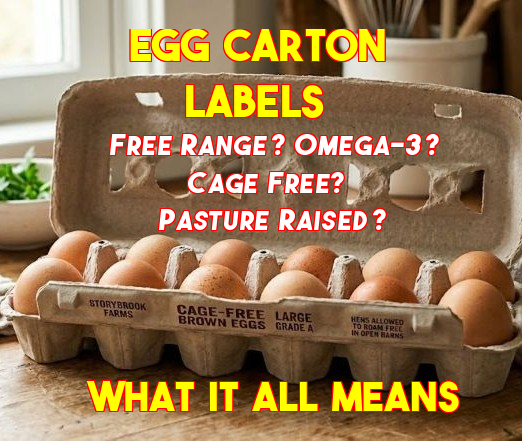
It can be a bit confusing buying eggs these days, lots of different labels, and prices too! Each label indicates something different about the way the eggs were produced, here’s a breakdown of what the most common labels mean.
Organic: In order for eggs to be labeled as “organic,” the hens that laid them must be raised according to certain standards. These standards include being fed an organic diet, having access to the outdoors, and being raised without synthetic pesticides or fertilizers.
Cage-Free: This label means that the hens that laid the eggs were not raised in traditional battery cages, which are small wire cages stacked on each other. However, it does not necessarily mean that the hens had access to the outdoors or were raised according to any specific standards.
Free-Range: This label indicates that the hens had some access to the outdoors. However, the amount of time they are allowed to spend outside, and the size and quality of the outdoor space can vary.
Pasture-Raised: This label indicates that the hens had access to the outdoors and were able to roam and forage on a pasture.
Omega-3 Enriched: This label indicates that the hens were given feed that is supplemented with omega-3 fatty acids, which can contribute to the nutritional content of the eggs.
Vegetarian-Fed: This label indicates that the hens were not given any animal byproducts in their feed and were only given a vegetarian diet.
No Hormones: This label indicates that the hens were not given any hormones to boost their egg production. This is not a requirement for all egg producers, as the use of hormones is already prohibited in egg-laying hens in the United States.
No Antibiotics: This label indicates that the hens were not given any antibiotics, either to prevent or treat illness. This is not a requirement for all egg producers, as the use of antibiotics is regulated by the FDA.
Battery: This term refers to the traditional method of raising hens for their eggs, in which they are kept in small, crowded wire cages. This method is now illegal in some countries but is still used in others. (Most commonly found on the grocery shelf at the lowest price).
Note: It’s important to note that these labels are not necessarily regulated in the same way in all countries, so the conditions in which the hens were raised may vary depending on where the eggs were produced.

Back to HOME PAGE

Fun Facts About Chickens

Did You Know?

Chickens are one of the oldest domesticated animals, with evidence of their domestication dating back to ancient Egypt over 4000 years ago.
Chickens are intelligent birds and can remember and recognize up to 100 other chickens.
Chickens have a complex social hierarchy and communicate with each other using over 30 different vocalizations.
Chickens can dream and have a sleep-wake cycle similar to humans.
Chickens have a good sense of direction and can find their way home over long distances.
Chickens have a pecking order and establish a social hierarchy through pecking and other forms of behavior.
Chickens can exhibit personality traits such as shyness or aggression, and some breeds are known to be more docile or energetic than others.
Chickens are omnivores and will eat a variety of foods, including seeds, insects, and even small reptiles.
Chickens have a highly developed sense of taste and are able to distinguish between different flavors.
Chickens are known for their ability to produce eggs, but they can also be raised for their meat.
More Interesting Facts…
Chickens, like all animals, have certain vital signs that are important indicators of their health and well-being. Some of the vital signs of chickens include:
Heart rate: A chicken’s normal heart rate is between 250 and 300 beats per minute.|
Respiratory rate: A chicken’s normal respiratory rate is between 15 and 25 breaths per minute.
Body temperature: A chicken’s normal body temperature is between 105-106.7 degrees Fahrenheit (40.5 and 41.5 degrees Celsius).
Capillary refill time: This is the time it takes for the blood to return to a chicken’s comb (the fleshy protuberance on top of its head) after being pressed. A normal capillary refill time is less than 2 seconds.
Hydration: Chickens should have moist, elastic comb and wattles (the fleshy protuberances on either side of the head). Dry comb and wattles can be a sign of dehydration.
Behavior: Chickens should be active and alert, with a normal appetite and thirst.
Monitoring these vital signs can help you identify any health issues that your chickens may be experiencing, and allow you to take appropriate action to address them.

Back to HOME PAGE