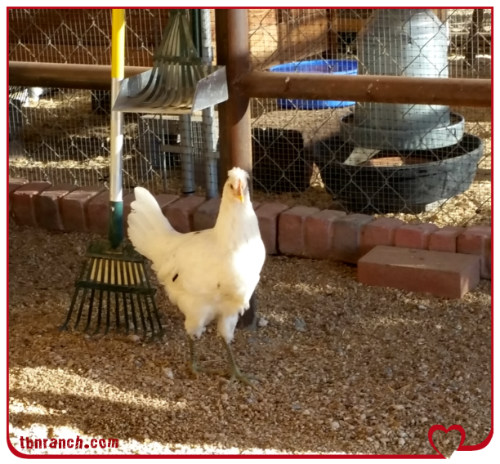
Meet Dottie, she’s a Leghorn Hybrid at nearly 3 months and my little trooper in the desert heat. Smart and resourceful to say the least. Unlike the other members of the flock, she cools off in the little pool provided and takes full advantage of the mist system.
Most of the flock is looking a little rough from temperatures ranging from 110 to 117. Not to mention I’m not feeling my best battling the heat while bringing them ice and fresh fruit during the day. But this is what chicken people do right? We love our birds no matter what. Ok, I’ll be honest, sometimes I do question myself on why I purposely add more chores to my life by keeping chickens! But isn’t it funny how the drudgery of chores is forgotten when they’re all done? Maybe it’s the fresh smell of pine shavings in the hen house, or the basket full of pretty eggs. But one thing is for sure when I’m heading back to the house, that last glance behind makes it all worthwhile. I feel blessed seeing my happy feathered family busy scratching in the dirt looking for nature’s little chicken treasures.
We’re all looking for the best ways to help our flock beat the heat. Here’s a home recipe to keep on hand when the temperatures threaten their well being. Knowing how and when to quickly make homemade electrolytes for heat exhaustion can be the difference between life and death for your backyard chickens… Read Article
Six Common Predators and the Clues Left Behind After an Attack
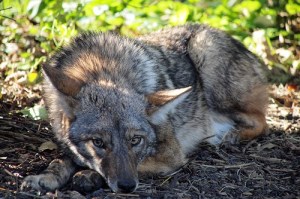
COYOTE
Coyotes will either tunnel or muscle their way into a coop. They’re smart, staking out the premises first to learn when the ideal time is to attack. A coyote is most likely to be seen at dawn and dusk, however, broad daylight attacks are not unheard of. Keep in mind coyotes are very active at night, and they can easily scale a 6-foot fence. When a coyote gains access to a chicken coop they’re known to kill all the birds, then take a couple with them. Signs a Coyote Leaves Behind After an Attack Birds missing. Necks broken. Feathers scattered everywhere in the coop.
FOX
Clever as a fox is a saying we’ve all heard, and it couldn’t be more true. They climb better than you could ever imagine and can dig their way into a coop with ease. Fox are smart and patient, they will watch your coop for weeks before they attack. Every bird the fox can grab in the coop will be killed, and often the entire flock will be completely wiped out. They’ll take as many birds from the coop as they can with them. Signs a Fox Leaves Behind After an Attack Many birds missing Feathers sprawled in the coop AND away from the coop Broken necks
RACOON
These clever egg-stealing masked burglars leave significant evidence of their presence. A raccoon rips open the crop and sometimes the breast to feast. You’ll find all the chickens still in the coop as a rule because coons have difficulty carrying them off. One of the raccoon’s most distinctive features is their extremely dexterous front paws, in other words, they’re extremely talented at opening door latches! Signs a Raccoon Leaves Behind After an Attack Rips open the crop and sometimes the breast. Dead chickens will most likely be left in the coop.
OPOSSUM
This little critter is after your chicks and eggs. That’s his primary agenda, but it may go after a small adult chicken at times. The opossum gains access usually through a small opening in the coop Signs an Opossum Leaves Behind After an Attack Doesn’t take birds from the coop. Tears open the abdomen. Interesting Fact: The opossum is a Marsupial. The adult females have a marsupium, or pouch where they keep their young while they grow up. Cool
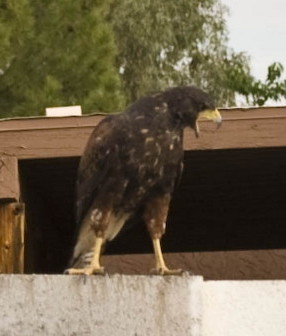
Hawk
These predators usually attack when chickens are free roaming during the day. Hawks, like the fox and coyote, are well prepared for their attack by staking out the premises beforehand. There’s no mistaking the evidence of a chicken attacked by a hawk, the signs are quite different from all other predators. Sharp talons and beaks are extremely effective in killing or injuring multiple birds. Signs the Hawk Leaves Behind After an Attack Some birds will be missing. Some injured birds will appear to be cut up. Injuries look as though chickens were stabbed with a knife.
OWL
Owls attack similarly to the hawk. They also stake out the potential of a meal by watching the chickens for a spell before they attack. Hawk or Owl? It’s not entirely impossible to tell the difference between a hawk and an owl attack. Raptors usually poop when they kill, fortunately, the poop of an owl and hawk are slightly different. You’ll find their poop near the feathers of the victim. Owl: White streak with clumps Hawk: Just a white streak Signs an Owl Leaves Behind After an Attack Neck and head ate. Deep knife-looking cuts on the abdomen.






 TBN Ranch Chicken Keeping Resources