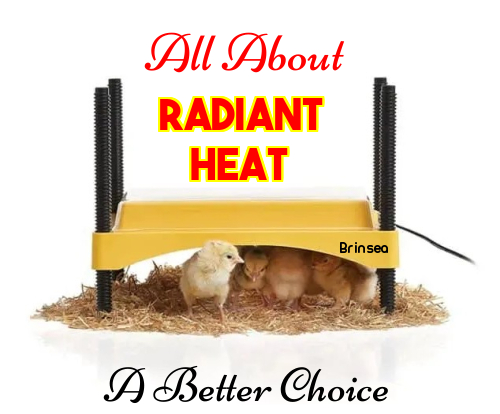
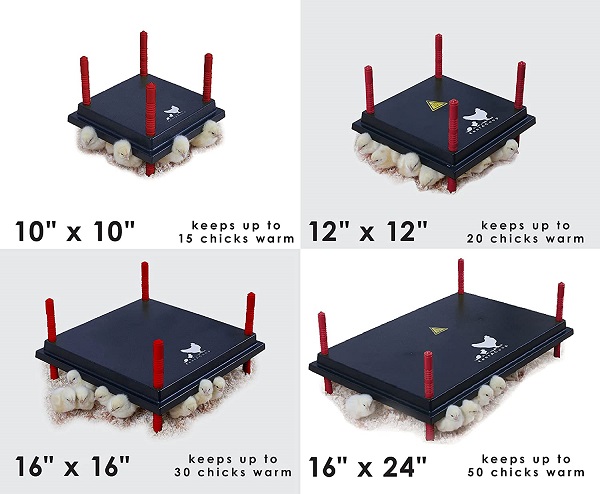
Radiant heat eases the burden and constant concern over the proper brooder temperature. Uses only 15 watts of energy versus up to 250 watts used by a heat lamp. A resourceful and safer alternative to a heat lamp, and less fire risk. With radiant heat, your chicks stay warm from direct contact with the heated underside of the plate. It’s not hot, it’s just right. 🙂 Adjustable and Available in Different Sizes, and Brands Easily accommodates the size of your growing chicks with 25 adjustable height settings ranging from around 1”-7” and can be customized to fit your flock’s needs.
A Few Choices…
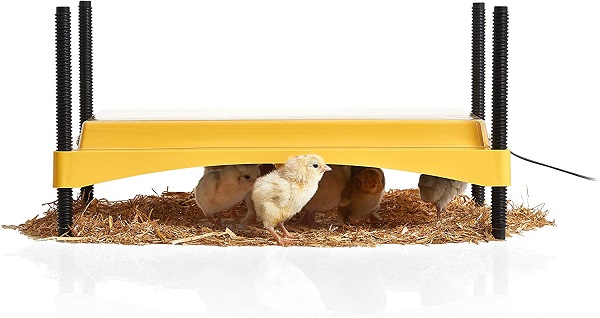
Brinsea
This is the brooder I’m using, been working great for years. Brooder for warming up to 35 newly hatched chicks. Safe 12 volt radiant-heated underside for producing uniform temperature. Price: Around $90. Available in Amazon
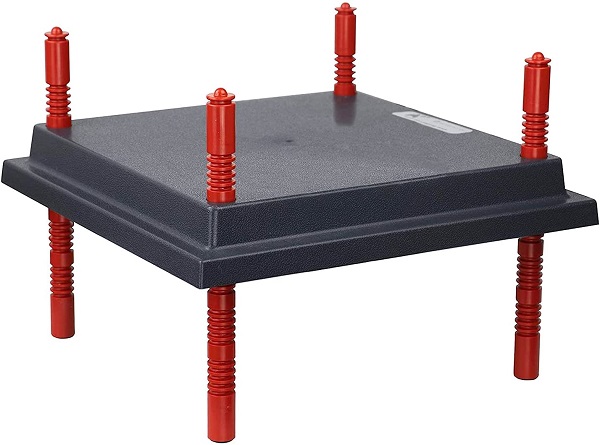
Rural 365 Brooder
Perfect for 10 to 20 newly hatched chicks. Adjust leg height so chicks can stand and have direct contact with the bottom of the chick brooder plate. Available on Amazon.
It’s Much Easier to Keep Baby Chicks Warm Than Trying To Keep Them Cool
Revised 4/9/25
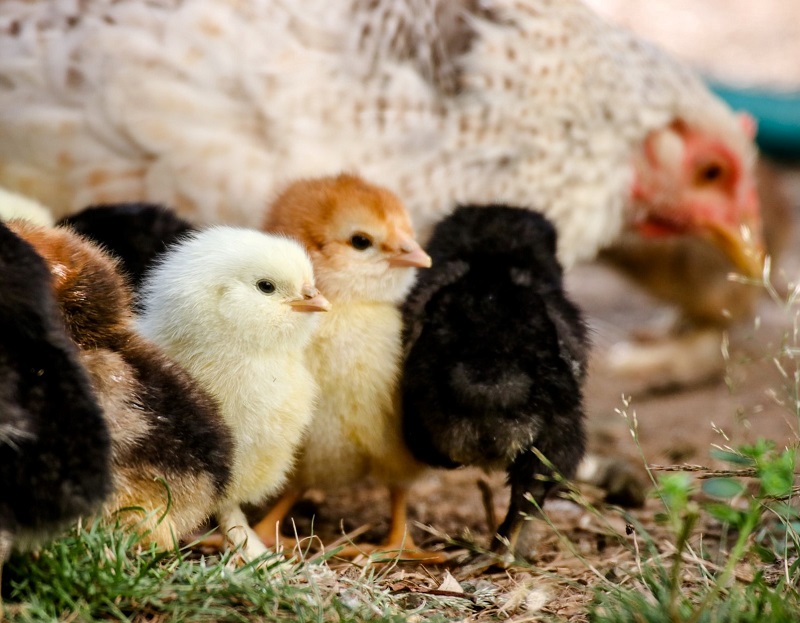
Most parts of the country raise chicks in Springtime when the weather is mild. This gives the birds plenty of time to mature through the summer months and be fully feathered by Fall. Not the case here in Phoenix because extreme temperatures of 100+ can start as early as May and by June, reach 110+. These conditions are not suitable for baby chicks, being this hot in a confined brooder is not only stressful but can be life-threatening. Chicks need to have a heat source, yes, this is true, but also need to be able to get away from it to stay comfortable. Improper brooder temperatures also increase the onset of pasty butt (fecal impaction.) For these reasons, in Phoenix, it’s best to start chicks in February, and by April they are mature enough to slowly acclimate to our rising temperatures. Remember, It’s much easier to keep baby chicks warm than try to keep them cool… which is impossible. Chicks are Best Kept Outdoors Raising chicks outdoors in a shed, barn, or garage is the best place to keep your baby chicks. They will most likely only need a radiant heat source. If the weather turns colder at night, a low-wattage heat lamp may assist in keeping the brooder temperature steady. You can buy low-wattage heat bulbs in the reptile section at your local pet or feed store. I usually use a red 75-watt bulb if the brooder temperature drops below 60 degrees. More on using radiant heat & heat lamps.
Fact: People can get sick with Salmonella infections from touching backyard poultry, their feed, and the places where they live and roam.
Here’s What You Need to Know
Keeping chickens can be a healthy & rewarding hobby, but what we need to talk about is the proper management that will keep your family safe from the dangers of salmonella. This isn’t talked about near enough and I feel too many chicken keepers are dismissing the fact that salmonella is found in bird droppings. If eggs are not handled properly, salmonella can be passed along to people. That’s the basic truth. But the facts are much broader than just safe egg handling, every chicken keeper should be well educated on proper housekeeping and coop management to safeguard against Salmonella. Simple Rules for Good Chicken Housekeeping Backyard poultry can carry Salmonella germs even if they look clean and well-kept after. After handling baby chicks, (especially children and people with weakened immune systems) should immediately wash their hands thoroughly. There should be a clean space between your home and where your chickens roam. That means they must have their own space where people won’t be constantly exposed to their droppings. Wear special shoes or boots when tending to your birds, and store them away from the designated clean space. Never eat or drink where your chickens live or roam. Keep your coop and where the chickens roam clean. Regular coop cleaning and fresh bedding should be at the top of your chore list. Collect eggs daily and keep the nest box clean. Eggs should never lay in droppings. Refrigerate your eggs, this slows the growth of germs. Coop equipment such as water or feed containers should be cleaned outdoors only. Chickens are not indoor pets and shouldn’t under any circumstances be allowed in your home. They aren’t to be cuddled and certainly not kissed.
Outbreaks of Salmonella Infections Linked to Backyard Poultry in 2020…
As of December 17, 2020, a total of 1,722 people infected with one of the outbreak strains of Salmonella were reported from all 50 states. 333 people (33% of those with information available) were hospitalized. One death in Oklahoma was reported. 24% of ill people were children younger than 5 years of age. Epidemiologic and laboratory evidence showed that contact with backyard poultry was the likely source of these outbreaks. 576 (66%) of the 876 ill people interviewed reported contact with chicks and ducklings. People reported obtaining chicks and ducklings from several sources, including agricultural stores, websites, and hatcheries. Testing of backyard poultry and their environments (such as backyard coops) in Kentucky and Oregon found three of the outbreak strains.





 TBN Ranch Chicken Keeping Resources