Chicken Keeping in Triple Digits

Surviving Phoenix, Arizona
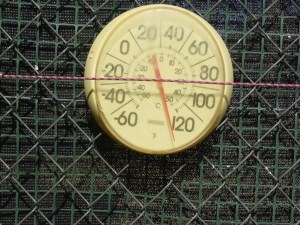
Shade is hard to come by in Phoenix,  but not impossible if you’re creative. If your chickens are in a small coop they are unlikely to survive triple-digit temperatures, I know that sounds a bit harsh, but it’s true.  June will most likely exceed 110, which means 120+ in the coop, and that’s a death sentence.
Your birds will fair well in temperatures up to 105 if they are not confined, have shade, and a place to dig a hole in the dirt. Make sure they have cool water available, if the water is too hot they won’t drink enough to stay hydrated. Make it easy on yourself, use buckets instead of those chicken drinkers that are impossible to clean and a big hassle to fill.
When temperatures reach over 105 in the shade it’s time to introduce a fan to the chicken yard.  I don’t use anything fancy, a $20.00 box fan will do the trick. Hang it from a fence (wreath hangers work nicely) or anyplace where it won’t tip over. Your birds will stand in front of that fan like they were watching a movie!
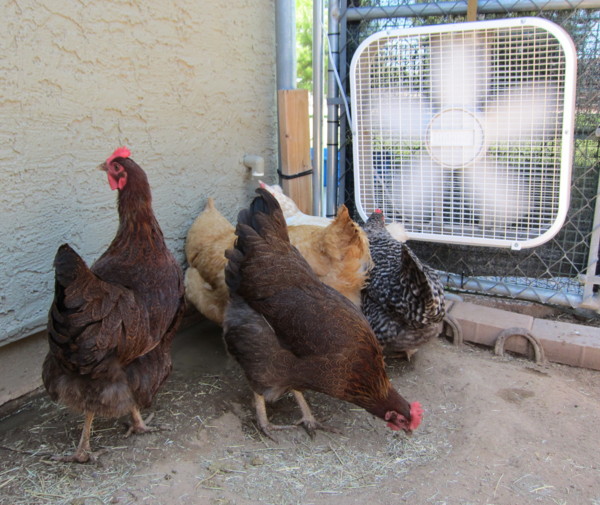
Gavin Flock, Summer 2011

June and July are the worst months for excessive heat, 110 -115+, and when you really have to stay on top of your chicken-keeping responsibilities. Mist systems help cool the air, especially with a fan to keep the air moving. I like the standing misters ($10.)  that attach to a hose. Place it right in the chicken yard, and dig up a small area near it so the moisture forms a little mud pool for the birds.
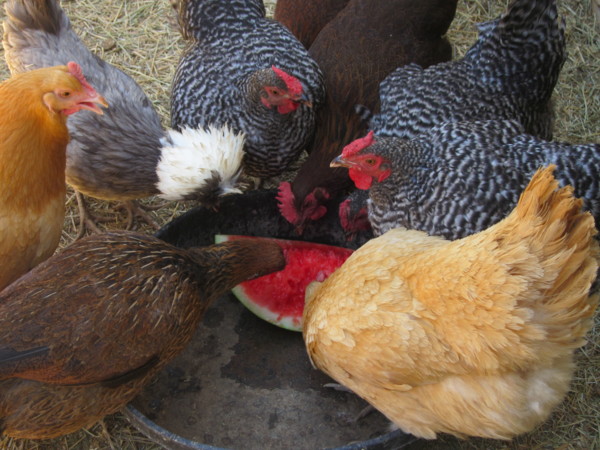
If you free-feed your chickens, don’t in summer.  Feed produces heat, so feed early morning, a little during the day, and just before they return to the coop at night.  Never offer scratch feed in summer, it’s a hot feed and unsuitable for your feathered desert dwellers. Offer your flock a watermelon, or a head of lettuce instead, this will help keep them hydrated.
Danger Signs of Heat Exhaustion

The first sign of trouble is dark red, then pale comb and wattles. As their condition worsens they will become unstable on their feet, lethargic, wobble, and even fall over and lie lifeless. They will die quickly if you don’t act fast.
Note: Heavy or meat Birds such as Orpingtons are the first to show signs of heat intolerance, watch them closely.
Chickens will hold their wings out from their body,  pant, and lay in holes on their side  – all normal behavior when they’re very hot.
What to Do
Submerge the chicken in a 5 gal. bucket of warm water and place the bird under a shade tree.  Don’t bring the bird indoors to air conditioning, this will only make matters worse when you return the chicken to the outdoors. A fan on low will help cool the bird quickly, they usually recover within 15-20 minutes.
Ideas for Providing  Shade
Shade Cloth
Mesh Tarps
Lattice
Palm Frond
Shade Sails

Back to Chicken Keeping Resources HOME PAGE

Raising Winter Chicks in Phoenix

When Can Chicks Be Moved Outside in Phoenix?

It’s a good guess you have your new chicks in a box in the garage or shed and are watching them quickly outgrow their safe haven of comfort and warmth.
At about 6 weeks old they are becoming a handful, looking a bit crowded in their quarters, and you’ve had enough of keeping up with the mess. I understand your dilemma and have good news for you. We live in Phoenix! With mild winter temperatures, even at 6 weeks, your chicks will be fine outside with the right housing accommodations. However, first, you’ll want to lower the temperature in their brooder over the next few days to get them used to cooler temperatures.

A suitable coop for 6-week-old chicks is something that will protect them from wind and rain. If your coop is drafty, a large tarp will do wonders. Buy the highest-grade tarp you can find, or use two.
If there’s a cold snap, say below 50 degrees, simply cover the coop with a heavy blanket. Moving blankets from Harbor Freight work great and they’re only $8. The chicks will huddle together at night and keep each other warm.
Give them lots of shavings or hay in the coop, and provide a low-sided brooder box filled with shavings in the corner for them to sleep in. If they don’t use it, that’s okay too.

Prepare for the Phoenix Heat Now

While watching your chicks grow in the confinements of their coop, this is a good time to think about summer’s arrival and prepare for their outdoor environment. Keeping chickens in Phoenix is tough, keeping them in small confinement quite honestly… can be a death sentence.
June and July will no doubt reach 110 to 115 degrees. This means, your coop could easily exceed 120 degrees, even if it’s in the shade. It’s imperative to provide a play area where they can dig holes in the dirt to stay cool.
A play area can simply be a fenced area off the coop. Look for or create a shady spot preferably near a water source so it’s easy for you to access. This is important because there will be days when you’ll want to use a mister, or maybe flood them a spot to help them cool off.

I wasn’t kidding!
Back to Chicken Keeping Resources HOME PAGE


Can Chickens Fly?

Will Your Chickens Fly the Coop? How High and How Far?

rooster-stock-photo.jpg

It’s understandable having a concern for your chicken’s safety. Especially if you’ve nurtured them since they were little fuzzy day-old chicks.  We have all spent substantial time worrying about their well-being from the brooder all the way to the coop. But when it’s time to move them to the chicken yard or coop, there’s a whole new set of concerns.
Fortunately, your chickens are not a big flight risk. Yes, they do indeed have wings, but I think we both know a chicken has yet to be seen soaring above rooftops. Their wings merely assist them, it’s doubtful a chicken could sustain flight for more than 10 seconds.
Chickens are capable of clearing a six-foot fence, but it would not be effortless and seldom by choice. Their survival instincts are intact, so any predator threat including the family dog, could indeed send them over a fence or up a tree.  But there’s no need to panic, they will come back when they’re ready, usually by dusk.
Will They Wander?
Chickens are very curious, but if you provide them with entertainment, food, water, and comfort, they aren’t likely to wander off. A grassy patch, garden, or even something as simple as a mud puddle will keep them quite busy. They aren’t runaways by any means, wherever you place them from their first day out of the brooder will become their safety zone. I had five-week-old chicks escape through a small hole in the chicken yard and were gone the entire day, but all returned home by dark.
The Alternatives
Another way to curb flight is to clip their wings, especially on lighter or smaller birds. Heavy birds aren’t near as likely to scale a fence, but on occasion, I have been proved wrong.  Aviary netting atop the chicken enclosure also works nicely and also serves as excellent protection from hawks.
The Bottom Line
Whether or not to worry about your chickens flying the coop is probably the last thing you should be concerned about. Keeping predators OUT is far more important than trying to keep chickens in.

Back to HOME PAGE