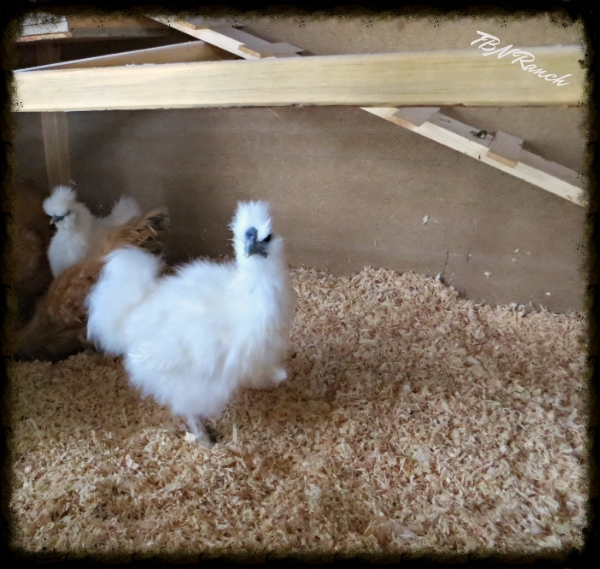
It’s difficult, but not totally impossible to determine the sex of a Silkie. There are signs that can help you long before the first egg or crow of a rooster. Behavior and size can be good indications of sex. Roosters are often bold, have that sturdy or stronger look, and sometimes they are larger. These are noticeable traits, even when chicks are still in the brooder. Look for the brighter, or sharper distinctions of color in birds when they reach 8 or 9 weeks. Roosters seem to stand out more, dazzling you with a little wow factor. These Silkies are all just under 3 months old, 2 white, and 2 buffs. The white Silkie pictured below is probably a rooster. He is much larger and has been at the top of the pecking order since the second week of life. The size between pic 1 and 2 is obvious, recognizing behavior traits is something you’ll notice by watching your own birds.
Probably a RoosterProbably A PulletProbably a Rooster
All we really can do is learn the behavior traits of roosters and recognize indications such as size. But I must admit, I’ve been positive about having a Silkie rooster… and been surprised 6 months later when it laid an egg. Gotta love those Silkie Bantams!
• What Fully Feathered Silkie Bantams Look Like • Brooder to Coop, Suitable Outdoor Temperatures
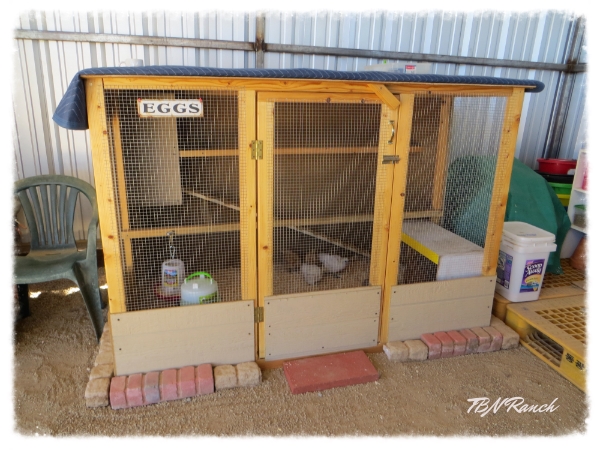
The Silkies are 6 weeks old and ready to leave the brooder. They’ve been raised in an insulated shed with natural light, and their only source of heat was radiant heat from the Brinsea Brooder. Night temperatures were between 48 and 55 degrees, and although I veered from the golden rule of keeping the brooder at 95 the first week and lowering the temperature by five degrees each week, my chicks showed no signs of discomfort. I usually don’t move chicks from the brooder until 7 or 8 weeks, but being kept in cooler conditions they tend to feather quicker. Here they are, Fanny, Jo, Pat, and Randi. Happy, healthy, thriving youngsters in their new coop. Which ones will stay or end up in the sale pen will be a question answered when they’re about 6 months old. This breed is nearly impossible to sex at this age, so the only sure way is to wait for the eggs or hear the crowing. Note: Remember to acclimate your chicks to cooler weather if they are being raised indoors. Chicks raised under a heat source and kept at a consistent temperature may take a week or two longer to fully feather.
Understanding Behavior, Traditional Heat Lamps, and the Radiant Heat Alternative
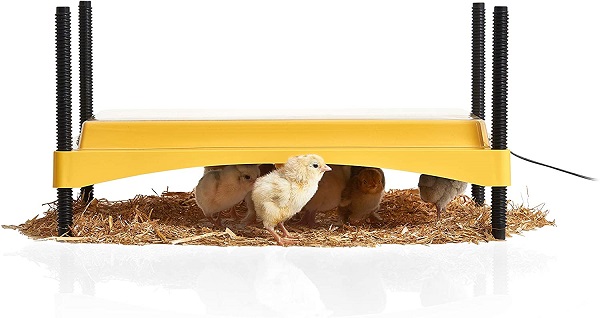
One of the biggest concerns most people have is keeping the brooder at the proper temperature. You’ve probably read the norm… 95 degrees the first week, then lower the temperature by 5 degrees each week until the chicks are fully feathered. That’s the rule of thumb and one I have always been faithful to. However… I know heat lamps are a royal pain when trying to achieve a specific and consistent temperature. And radiant heat from today’s brooders probably have you wondering if they offer enough heat. That’s why this season I decided to experiment, pitched the heat lamp, and put my trust solely in radiant heat on my newly hatched chicks. Yes, it seemed too cold in the brooder at night, certainly wasn’t 95, and that made me nervous. But I had a feeling radiant heat would prove better if I just stuck with it. Radiant heat seemed more natural, more like a mother hen, and that just had to be better than a clunky bright heat lamp dangling over their head.
Is Radiant Heat Better?
At one week old: The temperature in the brooder was 65, and the chicks weren’t huddled together trying to stay warm. They were playing, eating, and on and off congregating under the radiant heat brooder. No fuss, no worries, and no pasty butts, which is a common problem of chicks under stress during their first week of life. I think chicks can take the cold a lot better than we think. I’ve seen hens take their chicks outside in 30-degree temperatures with no problem. So why do we need to stress over the perfect 95-degree law in the brooder? We don’t, plain and simple. Here are my Silkie Bantam chicks in perfect condition, raised using radiant heat in temperatures 25-30 degrees below the recommended 95 degrees the first week. They’re five weeks old now and happy as can be.
The trick is to watch your chicks, they will tell you if they are uncomfortable. Too hot and they will be scattered far from the heat source. Too cold and they will huddle together in a corner for warmth. It doesn’t matter what the temperature is or where you live, baby chicks all communicate the same. Note: If I thought radiant heat wasn’t enough during very cold spells, I would use a heat lamp near the brooder rather than right over them. This will help warm the air around the brooder box just enough to still encourage the use of the radiant heat brooder within. It’s all about behavior… watch and they will teach you how much heat they need. It’s just amazing to watch those fuzzy butts, they’re a wealth of information… watch them, and you’ll see for yourself!






 TBN Ranch Chicken Keeping Resources