
Understanding Behavior, Traditional Heat Lamps, and the Radiant Heat Alternative

One of the biggest concerns most people have is keeping the brooder at the proper temperature. You’ve probably read the norm… 95 degrees the first week, then lower the temperature by 5 degrees each week until the chicks are fully feathered. That’s the rule of thumb and one I have always been faithful to. However…
I know heat lamps are a royal pain when trying to achieve a specific and consistent temperature. And radiant heat from today’s brooders probably have you wondering if they offer enough heat. That’s why this season I decided to experiment, pitched the heat lamp, and put my trust solely in radiant heat on my newly hatched chicks.
Yes, it seemed too cold in the brooder at night, certainly wasn’t 95, and that made me nervous. But I had a feeling radiant heat would prove better if I just stuck with it. Radiant heat seemed more natural, more like a mother hen, and that just had to be better than a clunky bright heat lamp dangling over their head.
Is Radiant Heat Better?
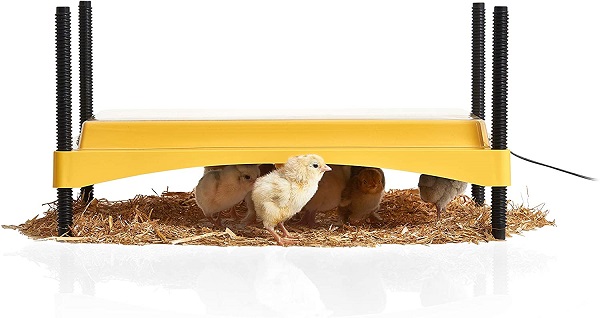
At one week old: The temperature in the brooder was 65, and the chicks weren’t huddled together trying to stay warm. They were playing, eating, and on and off congregating under the radiant heat brooder. No fuss, no worries, and no pasty butts, which is a common problem of chicks under stress during their first week of life.
I think chicks can take the cold a lot better than we think. I’ve seen hens take their chicks outside in 30-degree temperatures with no problem. So why do we need to stress over the perfect 95-degree law in the brooder? We don’t, plain and simple.
Here are my Silkie Bantam chicks in perfect condition, raised using radiant heat in temperatures 25-30 degrees below the recommended 95 degrees the first week. They’re five weeks old now and happy as can be.


The trick is to watch your chicks, they will tell you if they are uncomfortable. Too hot and they will be scattered far from the heat source. Too cold and they will huddle together in a corner for warmth. It doesn’t matter what the temperature is or where you live, baby chicks all communicate the same.
Note: If I thought radiant heat wasn’t enough during very cold spells, I would use a heat lamp near the brooder rather than right over them. This will help warm the air around the brooder box just enough to still encourage the use of the radiant heat brooder within.
It’s all about behavior… watch and they will teach you how much heat they need. It’s just amazing to watch those fuzzy butts, they’re a wealth of information… watch them, and you’ll see for yourself!




 TBN Ranch Chicken Keeping Resources