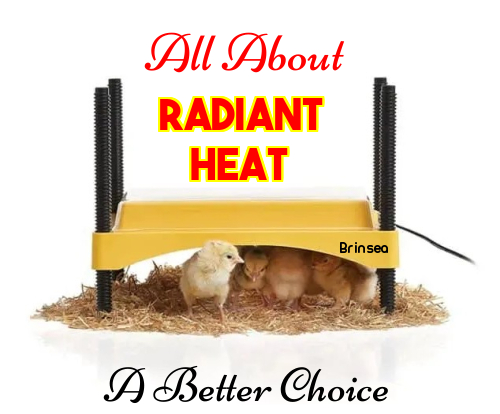
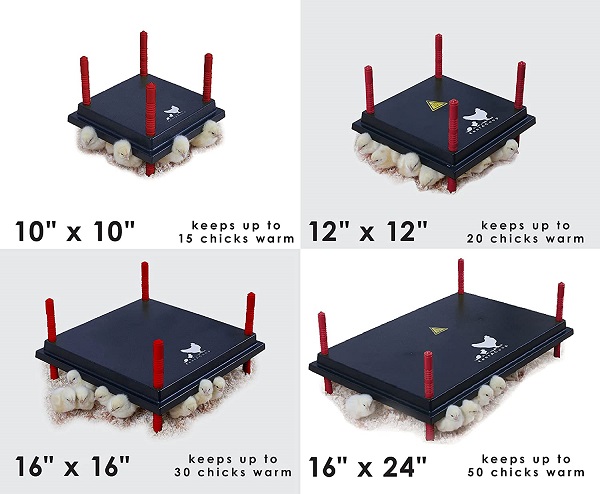
Radiant heat eases the burden and constant concern over the proper brooder temperature. Uses only 15 watts of energy versus up to 250 watts used by a heat lamp. A resourceful and safer alternative to a heat lamp, and less fire risk. With radiant heat, your chicks stay warm from direct contact with the heated underside of the plate. It’s not hot, it’s just right. 🙂 Adjustable and Available in Different Sizes, and Brands Easily accommodates the size of your growing chicks with 25 adjustable height settings ranging from around 1”-7” and can be customized to fit your flock’s needs.
A Few Choices…
Brinsea
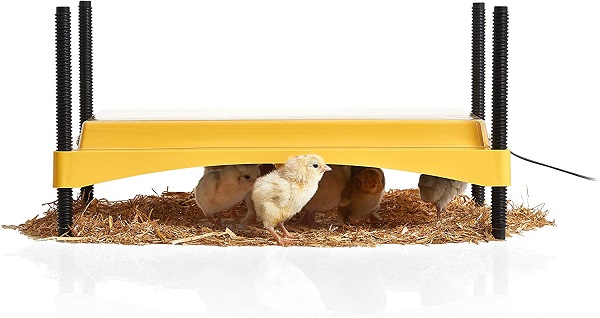
This is the brooder I’m using, been working great for years. Brooder for warming up to 35 newly hatched chicks. Safe 12 volt radiant-heated underside for producing uniform temperature. Price: Around $90. Available in Amazon
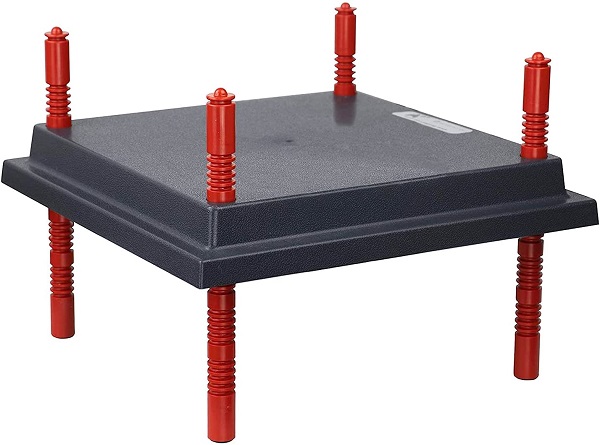
Rural 365 Brooder
Perfect for 10 to 20 newly hatched chicks. Adjust leg height so chicks can stand and have direct contact with the bottom of the chick brooder plate. Available on Amazon.
An Updated Review by an Actual User of Radiant Heat
Brinsea Brooder
Raising baby chicks in winter… we’re all set in our ways. Especially me, but right now I’m practicing what I preach about not keeping chicks in the house and using the Brinsea EcoGlow brooder in an outside shelter. Radiant heat certainly has its qualities, just not in every situation. Here’s why… Good Points There are many valid reasons for using radiant heat instead of a heat lamp, and for the most part, I agree with them all. It’s pounded into our head to avoid heat lamps being they’re a fire hazard, no argument there. It’s also true that pasting up (poopy bums) is less likely to occur when using the Brinsea brooder. Another good point is radiant heat is more like being under the mother hen. But, the Brinsea does have limitations to its effectiveness. The Downside, (but not a deal breaker) Using radiant heat is compromised in temperatures below 50 degrees. In other words, it doesn’t offer sufficient heat for chicks when they need it most. So considering the fact we shouldn’t keep chicks in the family living space, and heat lamps are a fire hazard that should be avoided… what to do? Every article on keeping baby chicks specifies the importance of keeping their environment at 95 the first week, then dropping the temp by 5 degrees each week until they are fully feathered. I realize there is constant controversy over the proper way to raise baby chicks. Our family has been raising chicks for three generations. My grandmother kept her chicks in the basement near the furnace, and my mother in the kitchen behind the wood stove. I’ve kept them in a box in a spare bedroom with a heat lamp, then in the laundry room, and later in the garage. But today these practices are criticized. I’ve tried to comply with what today’s health officials consider safe chick-rearing, and here’s my conclusion and solution. I’m currently using the Brinsea Ecoglow20 brooder for my 6-day-old chicks in an outside draft free 8×10 insulated shed. The outdoor temperature is 43 degrees. Taking into consideration that the Brinsea brooder only provides enough warmth for chicks in temps above 50 degrees, I see only one solution… a heat lamp. Securely hung above the brooder box at a height to keep the interior heat at 60. Ok… truthfully more like 70. Do I like the Brinsea EcoGlow? Definitely, wouldn’t be without one. However, I don’t feel it’s the perfect solution with all the capabilities of kicking good ol’ fashion chick rearing practices to the curb.
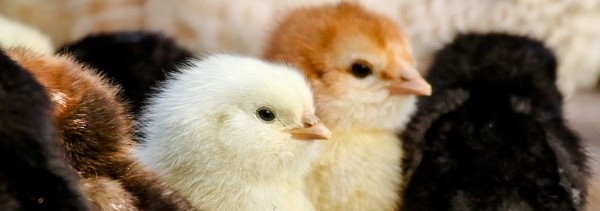
Let’s start at the beginning with chicks in the brooder. Chicks don’t just peck each other for lack of something to do. There is an underlying problem causing them stress and/or aggravation. As with any living creature, the first and foremost necessity for well-being is comfort. If a brooder lamp is necessary for warmth it shouldn’t be a blast of blinding light. You may want to make the switch from heat lamps altogether and switch to radiant heat from a radiant heat plate. This will solve your fluctuating temperature problem, and providing you have a good number of chicks, it will be sufficient in keeping them warm. Note: If it’s brutal cold… you can supplement with a low-wattage red heat lamp. Low-wattage heat bulbs are sold for reptiles, I usually use a 50 or 100-watt, depending on how cold it is. I’m convinced that happy and content chickens start in the brooder. It’s easy to tell if the brooder has comfort zones. You should see some birds huddled together under the heat source, some resting alone, some scratching in the litter, and some eating. Watch your chicks, their behavior says it all!




 TBN Ranch Chicken Keeping Resources