Help for Determining the Sex of Silkie Bantams

It’s difficult, but not totally impossible to determine the sex of a Silkie. There are signs that can help you long before the first egg or crow of a rooster. Behavior and size can be good indications of sex.
Roosters are often bold, have that sturdy or stronger look, and sometimes they are larger. These are noticeable traits, even when chicks are still in the brooder.  Look for the brighter, or sharper distinctions of color in birds when they reach 8 or 9 weeks. Roosters seem to stand out more, dazzling you with a little wow factor.
These Silkies are all just under 3 months old, 2 white, and 2 buffs. The white Silkie pictured below is probably a rooster. He is much larger and has been at the top of the pecking order since the second week of life. The size between pic 1 and 2 is obvious, recognizing behavior traits is something you’ll notice by watching your own birds.
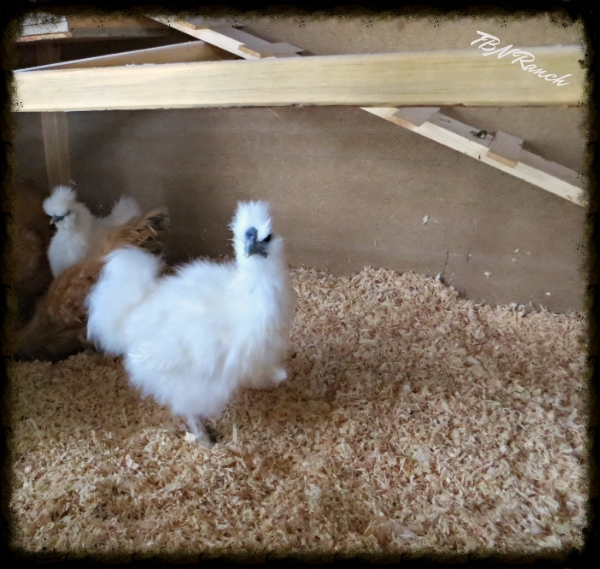
Jo, Silkie 12-17-14
Probably a Rooster
Pat, Silkie 12-17-14
Probably A Pullet
Fanny 2 Silkie 12-17-14
Probably a Rooster

All we really can do is learn the behavior traits of roosters and recognize indications such as size. But I must admit, I’ve been positive about having a Silkie rooster… and been surprised 6 months later when it laid an egg.  Gotta love those Silkie Bantams!

Back to Chicken Keeping Resources HOME PAGE

Restoring Our Farm’s Pre-Storm Dignity

There are subtle hints that Fall is not that far away. This means Phoenix’s brutally hot summer is finally going to let up and we can get back to working outside. This season we’ll have a different agenda, clean-up from the monsoon storm is the priority, then the repairs and rebuilding of what was destroyed.
Although the temperatures are still a steamy 109, the sun isn’t quite as intense as it was a month ago and there are signs of relief. School supplies are on the store shelves, and summer clothes are hanging on store sale racks, and that means only one thing to me. Phoenix will soon turn from a hellish territory to a lush paradise for seven whole months.
Seven months… plenty of time to restore the farm to its pre-storm dignity. There’s a plan for the new shed row barn, and the replanting of lost trees and foliage will begin in November. There is progress, we’ve made a dent in the clean-up and the shed row barn is half down and salvaged materials neatly stacked.

Our in-home remodeling projects are starting to look worthy of our efforts, and it looks like we just might meet our Spring completion deadline. However, take note I didn’t mention which Spring!
There will most likely not be any chicks in the brooder this Oct. With the barn construction, there will be too many disturbances and my hens will probably be unreliable setters.
Changes are always going to be a part of life, and none of us are immune. Rather than wallow in woe…
Perhaps change is the ladder forced upon us when we quit reaching for higher levels of accomplishment.

Back to HOME PAGE

Chickens: Intervention and Management of Problematic Pecking

Stressful Conditions Create Unhappy Chickens and Bad Behavior

Pecking problems can begin even when chicks are still in the brooder. At this age, they start pecking the toes of other chicks. When pecking occurs in older birds, they tend to peck the backs, heads, and vent areas.  Whether your birds are chicks, pullets, or mature chickens, pecking can turn into a serious matter without intervention.
Pinpointing the Problem
The normal behavior of chickens does include establishing a pecking order. So it’s important to watch your flock to learn the difference between normal and problematic pecking. It’s less likely to have a pecking problem if your flock is uniform in size, age, and breed. All your birds should be in good health as well; those that show signs of weakness are more apt to be a victim of aggressive behavior.
When persistent pecking is observed, check your flock’s environment. Poor living conditions or inadequate nutrition can be a factor in bad behavior. Make sure all members of the flock have access to food and water, even if it means putting it in more than one place. Hens do not take kindly to a shortage of nest boxes either; place them in various areas with easy access.
When there’s excessive pecking brewing in the brooder, it may be something as simple as lighting. Improper or undesirable lighting in the brooder can cause stress, If you’re using clear bulbs in the brooder, switch to red. Check the temperature in their environment, if it’s too hot, or cold, this can contribute to pecking. Adequate space is also vital, whether in the brooder or the coop.
Last, but not least, check for parasites. Examine your birds, their droppings, and the coop, and treat if necessary.
Pecking habits and cannibalism occur when birds are under stress and unhappy.
Take a good look at the environment that has been created for them. Is it what your chickens need to live in harmony?

Back to HOME PAGE