The Step-by-Step Process of Introducing a New Chicken to an Existing Semi-Confined Flock
Anybody who raises chickens knows the drama of adding a new bird… and that’s where I am now. My Silkie chicks have been in plain sight of an established flock since they were 7 weeks old. Does that mean they’ll all get along? Heck no!
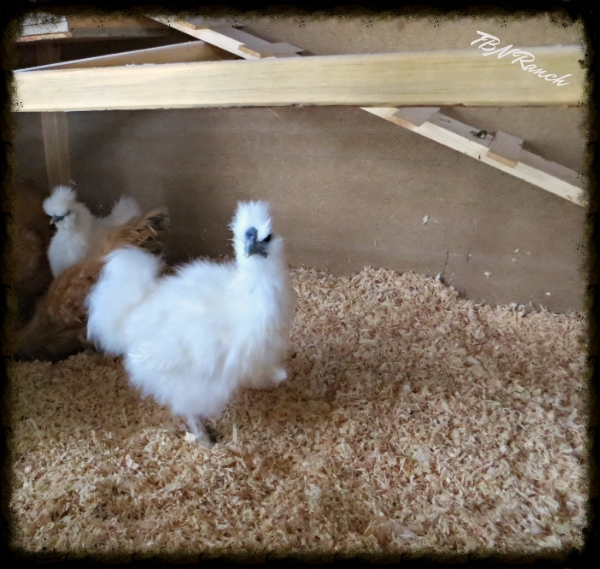
I ended up selling all the Silkie pullets but one, Randi, a pretty little buff, now five months old… and ready to join the flock. Two weeks ago I opened her coop door allowing her freedom to join my hens. But as expected, normal behavior is to stay where it’s safe.

Little Randi dared to venture outside her coop a little more each day. For another few days, she stayed close to her own coop and food source. When the big bad hens got too close she’d make a mad dash to the safety of her home sweet home.
Yesterday I noticed Randi was getting brave, and although keeping her distance from the flock, she was exploring far beyond her safety zone. It was now time to provide an extra feeder and drinker where all the hens randomly hang out. The first argument is usually over food, so I attempted to avoid that war by protecting the established flock’s groceries. Sometimes that works, but sometimes the boss hens split up and claim both food sources. Meanies! That was a risk, nevertheless, against my better judgment, climbed a ladder 12 feet to the roof supports and hung rope for another oasis. Not only did I manage to survive that ordeal, but it worked… the hens did not split up, allowing little Randi access to the new chicken buffet.
Throughout the day I watched for trouble. Not expecting harmony by any means, but whether or not Randi would fair well in the hens’ coop that night still needed to be evaluated. Adding a new member to a flock can be ugly, and disturbing to watch, especially when it’s forced. Hens don’t take kindly to a newcomer at bedtime, every spot on the roost is not only reserved but earned.
Having a bird pecked on causes all sorts of other problems, all of which I make every attempt to avoid. Having injured birds means isolation, and wound care, not to mention another coop to clean. All that equals more work, but more importantly… the pecking order is interrupted in the interim. So it’s important to be patient and not rush introductions, new chickens find their place among the flock all in good time. Ample space is crucial, this allows the newbie to avoid confrontation and build the confidence to venture about without the constant fear of being threatened.
After a day of evaluating the flock’s somewhat aloof behavior towards Randi’s presence, I decided it was safe to put Randi in the hens’ coop that evening. But to avoid the inevitable roost argument, I let Randi return to her own coop at dusk, closed the door behind her, and waited an hour.
The best time to sneak her into the big girl hen house would be after the hens are roosting for the night. Why? Because hens are very unlikely to leave the roost until the first sign of morning light. I put another nest box in the hen’s coop area that none of the ladies have seen before… unclaimed. It was now time to move Randi from her coop to the hen house and place her in the new nest box. She’d feel safe there for the night, and in time… choose her own place to roost.
Up With the Chickens
What’s the first thing chickens do when they leave the roost? Eat, poop, and definitely do NOT want to see an intruder at their breakfast table. So I was there, at 6 AM to open the coop door… to freedom, creating a distraction far more appealing to the hens than dealing with the feathered stranger.
The ladies quickly left the newcomer behind and went about their business beyond the coop of confinement. Randi stayed in the coop, oblivious to the normal routine of the flock. The hens would be back to lay their eggs, and again at dusk to roost for the night. Eventually, Randi will join their redundant itinerary, usually within a month. In the interim, her spot in the pecking order will depend on her. She will remain the bird with the lowest seniority unless she aggressively earns a higher ranking.
Conclusion
After three days of all the girls being confined for the night, the morning wait for a human to come and open the coop door has been without any significant incidences, except for a few missing tail feathers. No blood, no bald birds, and minimal arguments… I call that success!




 TBN Ranch Chicken Keeping Resources